Why alcohol is relevant to CYP450 discussion
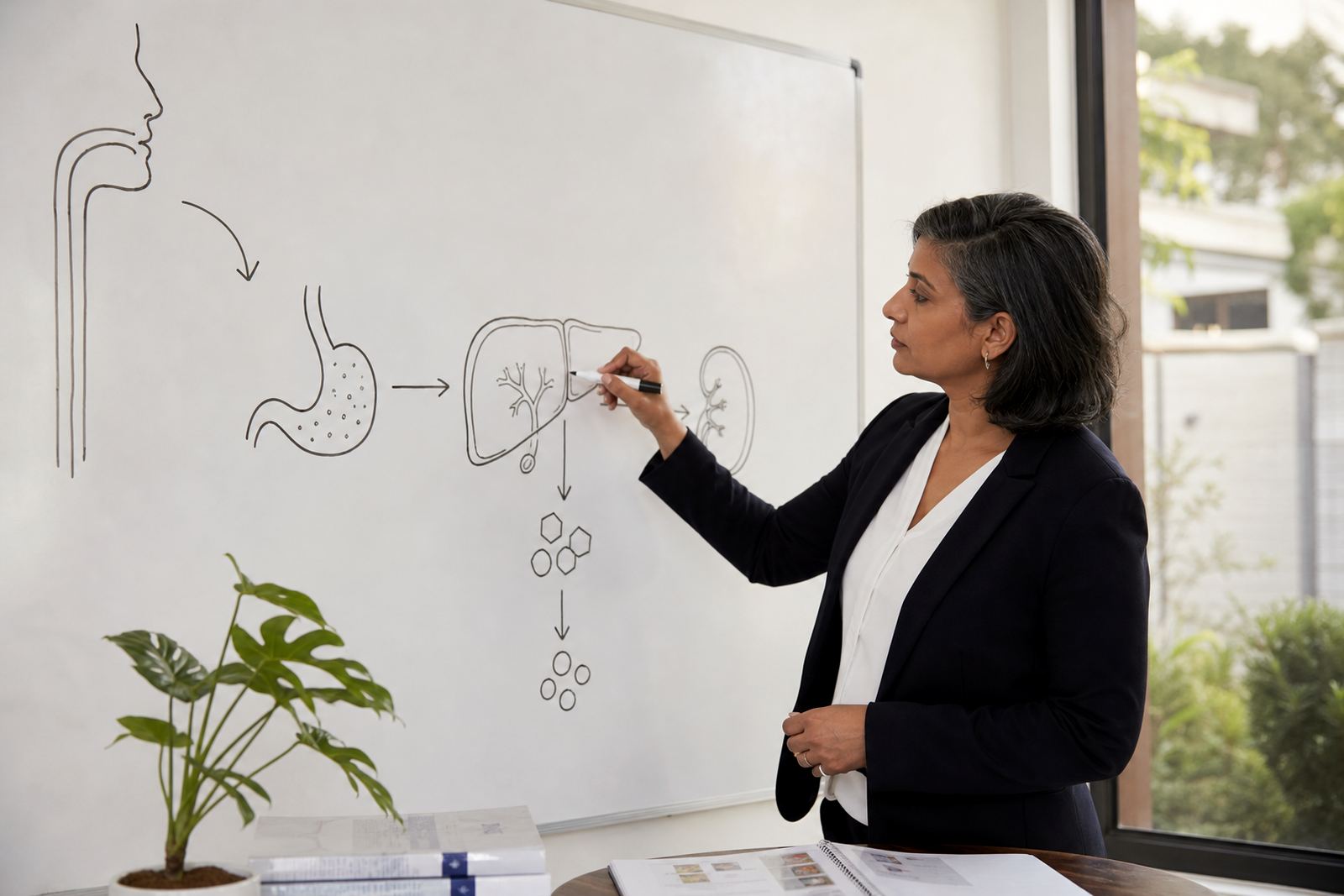
Alcohol comes up in CYP450 teaching because it can change how certain medicines are processed, and some medicines can also change how alcohol is handled. The main point is simple: enzyme pathways do not work in isolation. They interact with each other, with liver health, with nutrition and with a person’s wider medicine list.
In practical terms, clinicians and pharmacists often need to think about whether alcohol may add to sedation, affect the liver, or alter the way a medicine is broken down. That does not mean every drink causes a major interaction, but it does mean alcohol history belongs in a careful medicines review.
- Enzyme activity can vary from person to person
- Regular alcohol use and occasional use are not the same in enzyme terms
- Medicines for pain, sleep, anxiety, infection and mood deserve extra attention
The main enzymes people talk about in alcohol metabolism
When people speak about alcohol metabolism, they usually mean more than one enzyme system. Alcohol dehydrogenase is important, and CYP2E1 is often discussed because it can become more active with repeated alcohol exposure. Other CYP pathways may matter too, depending on the medicine involved.
For educational purposes, it helps to keep the language plain. Alcohol may compete with medicine metabolism, induce certain enzymes over time, or contribute to liver stress in ways that change a person’s response to treatment. The exact effect depends on the medicine, the person and the pattern of alcohol use.
- CYP2E1 is often the most discussed CYP enzyme in alcohol related teaching
- Some medicines can be affected by enzyme induction rather than simple competition
- Liver function and nutrition can influence what happens in real life
Medicine groups where alcohol questions often arise
Alcohol reviews are useful whenever a patient is on medicines that can cause drowsiness, liver strain or narrow safety margins. This is especially relevant when several medicines are used at once, which is common in both private and public care across South Africa.
A good interaction check is not just about one item on a list. It asks what else the person takes, whether they use over the counter products, and whether they have had recent changes in appetite, weight or liver tests. That is where a plain-language summary can help a busy clinician or pharmacist.
- Pain medicines and combination products
- Sleep and anxiety medicines
- Some anti-infective medicines
- Medicines used for mood, seizures or chronic disease
- Herbal and wellness products that may also affect enzymes
A patient in Claremont might mention weekend wine with a new prescription, while someone in Soweto or Bloemfontein may not think to mention homemade remedies, cough mixtures or tonic drinks. Those details matter because the interaction risk is often in the combination, not in one item alone.
What careful alcohol history taking should cover
A useful alcohol history is factual, not judgemental. It should help the team understand frequency, amount, pattern and timing relative to medicines. For a literature review or case note, the aim is to document enough detail to support safe interpretation without making assumptions.
South African practitioners often work with limited consultation time, so a short structured approach is practical. The conversation should stay respectful and clear. It should also be documented in a way that another clinician can understand later, especially if the patient moves between Cape Town, Johannesburg or Durban and sees more than one provider.
- How often alcohol is used
- Whether use is occasional, regular or heavy
- Whether there are binges or daily intake patterns
- Which medicines and supplements are taken at the same time
- Any history of liver disease, poor nutrition or past adverse reactions
How enzyme context changes patient education
Patient education works best when it explains the reason for caution in ordinary language. People are more likely to act on guidance if they understand that alcohol may change how a medicine behaves in the body, or increase side effects such as drowsiness or nausea. The message should be specific to the medicine and should avoid blanket statements that are not supported by the evidence.
For wellness practitioners, this is especially important. A client may be asking about a supplement, a herbal tea or a detox plan, while also taking prescription treatment. The safe response is not to guess, but to encourage review by the treating doctor or pharmacist.
- Explain possible interaction pathways, not alarmist outcomes
- Use plain terms like drowsiness, liver load and slower breakdown
- Encourage the patient to check before mixing alcohol with medicines
That kind of communication is useful in a Sandton clinic, a public hospital in Pretoria or a community practice in Durban. The setting changes, but the need for careful explanation does not.
What CYP450 Insights prepares for this topic
For educational teams, alcohol enzyme context often needs more than a short answer. It may call for a literature review, a clinician-facing brief, a training talk or a plain-language summary for staff who are not specialists in enzyme pathways. The material should stay anchored in accepted general knowledge and should avoid claims that go beyond the evidence.
CYP450 Insights prepares content that helps clinicians, pharmacists and wellness practitioners work from the same understanding. That includes clear summaries, reference lists and slide material for internal teaching. If a local team in Rondebosch or Newlands needs a practical note for case discussions, the focus stays on enzyme context, documented interactions and when to refer back to the prescriber.
- Literature Reviews for enzyme and interaction questions
- Educational Briefs for clinic and pharmacy teams
- Plain Language Summaries for mixed audiences
- Interaction Overviews for common medicine groups
- Training Talks and Team Workshops for South African settings
When alcohol is part of the conversation, the safest habit is to slow down and check the full medicine picture. If there is any doubt, speak to the person’s doctor or pharmacist rather than making assumptions.