What Lab Report Language covers
Lab Report Language is an educational reference for the wording often used when CYP450 enzymes, drug metabolism, and interaction notes appear in reports or summaries. It explains the terms that tend to cause confusion, such as enzyme activity, inducer, inhibitor, substrate and phenotype, in clear South African English that suits teaching, journal review and team discussions.
It does not test patients, interpret results for treatment, or replace a doctor or pharmacist. The aim is simple: help readers understand the language around CYP-related findings so they can ask better questions and use source material more carefully.
- Plain-language explanations of common report terms
- Useful for educational notes, handovers and training talks
- Written for South African clinicians, pharmacists and wellness practitioners
Sizes and format options
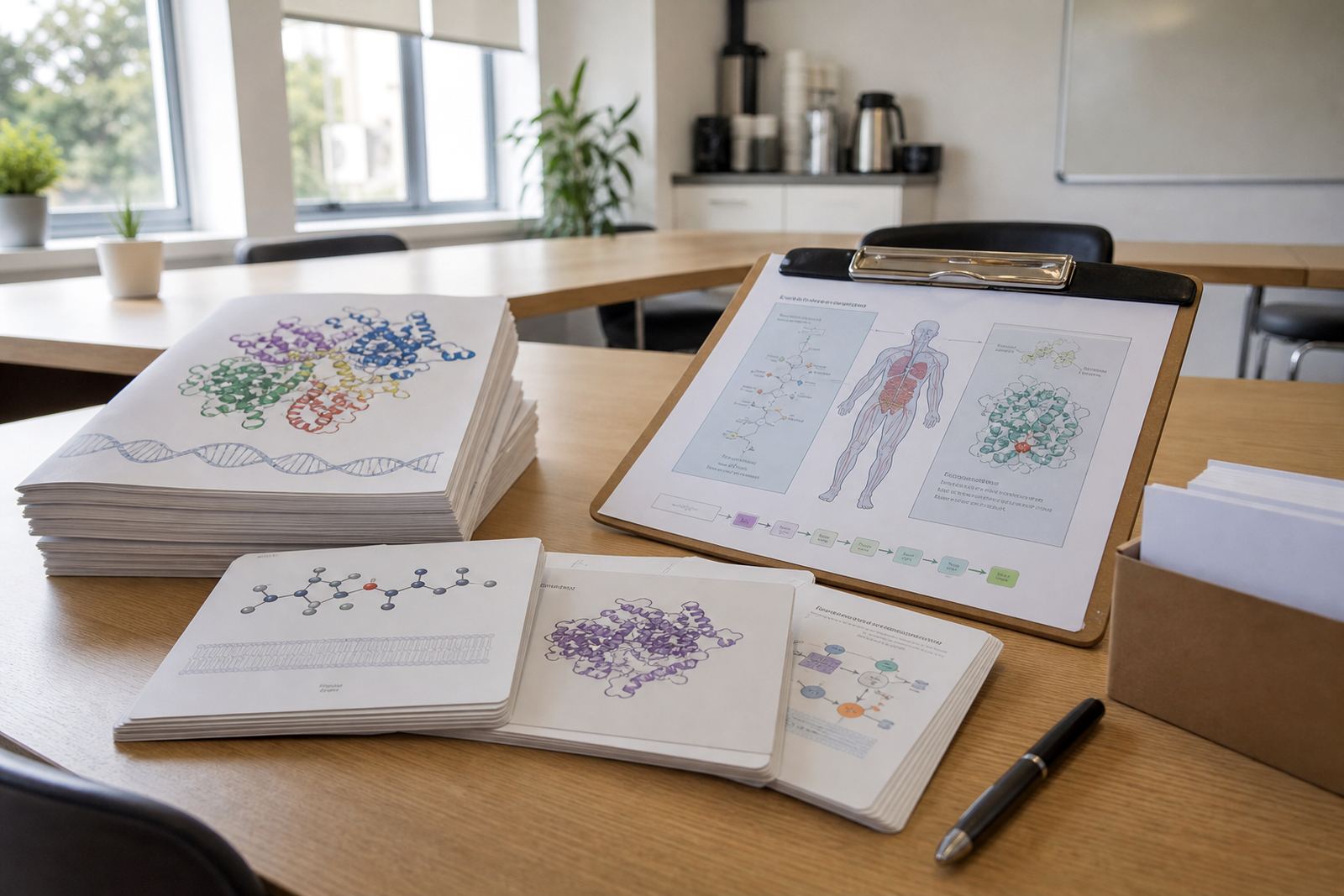
The guide is available in short, medium and extended formats depending on how much detail your team needs. Short formats work well for a quick staff refresher, while the longer option suits teaching packs, reference folders and content review sessions. Each version keeps the same careful tone, with the depth adjusted for the audience.
Typical options include a one-page quick guide, a 4 to 6 page summary, and a fuller 10 to 12 page reference note. For groups in Cape Town, Johannesburg, Pretoria, Durban and Bloemfontein, the format can be matched to in-person workshops or remote study packs.
- Quick guide: 1 page
- Standard brief: 4 to 6 pages
- Extended reference: 10 to 12 pages
- Optional plain-language glossary at the back
Where it suits best
This guide suits settings where people need a common reading language for CYP-related material, but do not need a clinical report from a laboratory. It is useful in private practice, academic teaching, pharmacy teams, wellness education, and internal review meetings where report wording needs to be understood the same way by everyone.
In Cape Town, Johannesburg and Durban, teams often use this sort of material when discussing medicines, supplements and interaction risks in a careful general way. It is especially handy for new staff, students and clinicans who need a cleaner way to read technical phrasing without losing the original meaning.
- Pharmacy teams reviewing interaction language
- Clinician education and journal clubs
- Wellness practitioner training and referrals
- Team workshops and case note development
Installation, access and working setup
There is no physical installation required. Lab Report Language is supplied as a written educational resource that can be used on-screen, printed for filing, or inserted into teaching packs. For teams that want a presentation version, it can also be adapted into slide notes or workshop handouts.
Power needs are limited to the device you already use, whether that is a laptop, tablet or office computer. No gas, laboratory equipment or specialist service connection is required. If you are running a session in an office in Rondebosch or a meeting room in Newlands, a basic charger and backup power for load-shedding are usually enough.
- File format: PDF or editable document on request
- Used on laptops, tablets and office computers
- No special utilities, plumbing or ventilation needed
- Useful for remote teams and in-room workshops alike
Care, updates and servicing
Care is straightforward. Keep the latest version filed with your teaching materials, and review it when your team changes the way it explains CYP terms or when new educational sections are added. If your group uses a printed copy, keep it away from sunlight and damp areas, especially in coastal Cape Town where humidity can make paper curl over time.
Servicing here means periodic content review rather than technical maintenance. We can refresh the wording, tighten examples, or align the guide with your training needs so the content stays useful and easy to follow. For most users, a yearly review is a sensible starting point, or sooner if your internal education programme changes.
- Store as a master copy and working copy
- Review after major curriculum changes
- Replace outdated versions in shared folders
- Use clean printed copies for workshops and filing
What to check when ordering
Before you order, check who the guide is for, how long it needs to be, and whether you want a quick reference or a fuller teaching note. It also helps to decide whether the tone should be aimed at pharmacists, general clinicians, or mixed wellness teams so the wording stays pitched correctly.
You should also confirm the preferred file format, the level of detail required, and whether you need a reference list section or workshop notes alongside the main guide. If you are planning use across several offices, from Pretoria to Bloemfontein, ask for one wording standard so everyone works from the same version.
- Target audience and reading level
- Preferred length and format
- Whether a glossary or reference list is needed
- Any house style or wording preferences
- Deadline for review and delivery
How teams usually use it
Most teams use Lab Report Language as a support tool rather than a standalone teaching course. It sits beside literature reviews, educational briefs and case note development, giving people a practical way to read the text that appears in educational examples and discussion material. That makes it easier to keep the science clear without overcomplicating the message.
It can be folded into a short training talk, used in a journal scan, or attached to a curriculum support pack. The value is in helping teams read common wording consistently, which saves time during meetings and makes it easier to speak about enzyme pathways in a careful, shared way.
Key facts
| Product type | Educational plain-language guide |
|---|---|
| Core use | Explains common wording in CYP-related report examples |
| Format sizes | 1 page, 4 to 6 pages, 10 to 12 pages |
| Audience | Clinicians, pharmacists and wellness practitioners |
| Delivery | PDF or editable document on request |