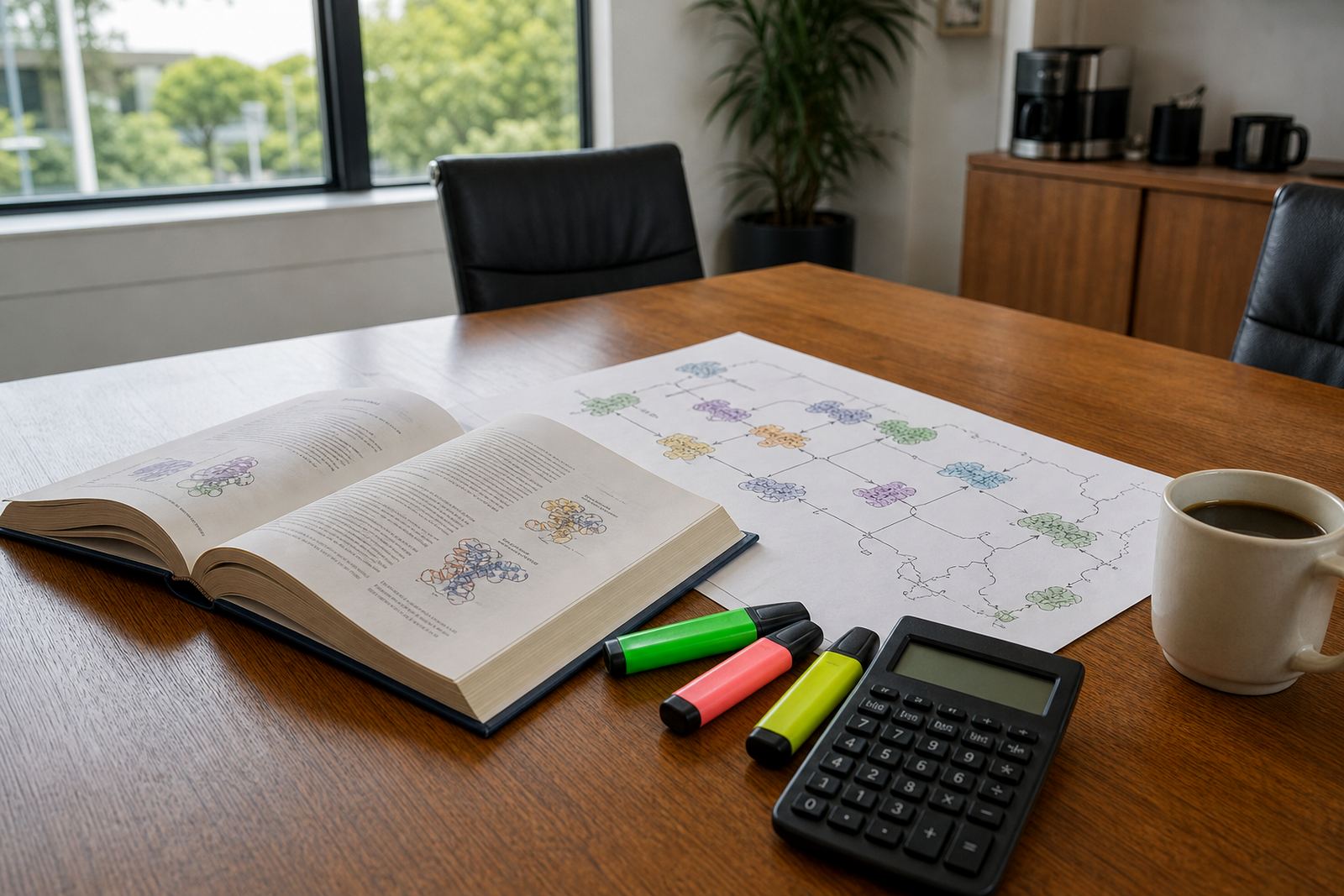
What this communication brief covers
This brief turns CYP450 enzyme ideas into plain language that patients can follow at the bedside, in a counselling room, or after a consult. It focuses on how the body can process some medicines differently, why interactions matter, and when a patient should speak to their doctor or pharmacist about their medicines. The aim is clarity, not diagnosis, and it stays within established general knowledge.
It is suited to clinicians who need a short explanation for a patient handout, a pharmacy consultation, a wellness follow-up or a team teaching session. The wording keeps the science careful and readable, with no dosing advice and no personal treatment direction.
Options, formats and length choices
Talking to Patients can be prepared in several lengths depending on how much detail you need. Some teams want a one-page quick brief, while others prefer a fuller handout with a short Q and A section. The content can also be split for a leaflet, a slide note or a staff training pack.
- Short brief: 1 page, for quick patient explanations and discharge discussions
- Standard brief: 2 to 4 pages, for counselling notes and clinic folders
- Extended brief: 5 to 8 pages, for training talks and internal reference
- Plain-language summary: simplified reading level for general patients and caregivers
- Team version: includes key terms, cautions and follow-up prompts for staff use
If you need a more focused version, the brief can centre on one medicine class, one enzyme pathway, or one common patient question such as why two people may respond differently to the same medicine.
Where it suits in South African practice
This brief works well in Cape Town, Johannesburg, Pretoria, Durban and Bloemfontein where patients often need a clear explanation in limited time. It suits private practices, pharmacy consults, outpatient clinics, academic teaching and wellness settings that deal with medicine questions but do not handle testing or treatment. It is also useful for mixed-language teams that need a clean starting point before translating the message into a local patient voice.
Because CYP450 topics can sound technical, the brief is written for real-world conversations in a busy setting, including load-shedding interruptions and short appointment windows. The structure helps the reader move from the general idea to the follow-up step without losing the thread.
- Patient counselling and medicine review discussions
- Clinic education materials and waiting room handouts
- Pharmacy support notes for medicine interactions
- Wellness practitioner education sessions
- Internal team training and case note development
Format, access and practical setup needs
As an educational brief, this product does not need installation, power or gas. It is supplied digitally, with print-ready text available for teams that want paper copies for filing, training or handout packs. If your practice prefers hard copies, please check your printer settings, paper size and whether you need colour or black and white output.
For shared practice use, it helps to keep the brief in a central folder that staff can reach quickly during consults. In older buildings or coastal areas such as Rondebosch and Newlands, printed copies should be stored away from damp and direct sunlight so the pages stay clean and readable. If the brief is used on a tablet or laptop, make sure the device is charged before sessions because power cuts can interrupt patient education at the wrong moment.
Care, review and updating the wording
Because medicine science is best kept current, the brief should be reviewed regularly against established general knowledge and any new guidance your team is using internally. Keep the language plain and careful, especially where patients may confuse enzyme metabolism with a diagnosis or a treatment plan. A small annual review is often enough for educational material, though teams working with frequent medicine questions may prefer more regular checks.
For printed copies, store them flat, dry and away from coffee spills and clinic traffic. If you are using a folder system, mark the version date clearly so staff know which summary is current. A minor typo can happen in any fast-moving practice, but the core meaning should stay exact and unambiguous.
- Check version date before use
- Review terminology for clarity and consistency
- Keep follow-up prompts aligned with your practice process
- Replace worn printed copies when pages fade or curl
What to check when ordering
When ordering Talking to Patients, send through the audience, the intended reading level and whether the brief is for patients, staff, or both. It also helps to say which CYP450 topics must be included, such as drug interactions, metabolism pathways, or general medicine response. If the material will sit alongside other handouts, let us know the page size and whether you want space for your practice details.
Useful order details include the preferred length, any terms that must be avoided, and whether the copy needs a short follow-up prompt that tells readers to speak to their doctor or pharmacist about their medicines. If you want a companion training talk or slide deck, mention that at the start so the wording matches across all materials. That way the final brief fits the way your team already works.
- Target reader: clinician, pharmacist, wellness practitioner or patient
- Preferred length: short, standard or extended
- Format: digital, print-ready or both
- Topics to include: interactions, enzyme basics, follow-up wording
- Page size and branding needs: A4, letter or practice format
Key facts
| Product type | Educational communication brief |
|---|---|
| Core use | Plain-language explanation of medicine-metabolism concepts and follow-up prompts |
| Length options | 1 page, 2 to 4 pages, or 5 to 8 pages |
| Format | Digital file and print-ready copy |
| Audience | Clinicians, pharmacists, wellness practitioners and patient-facing teams |