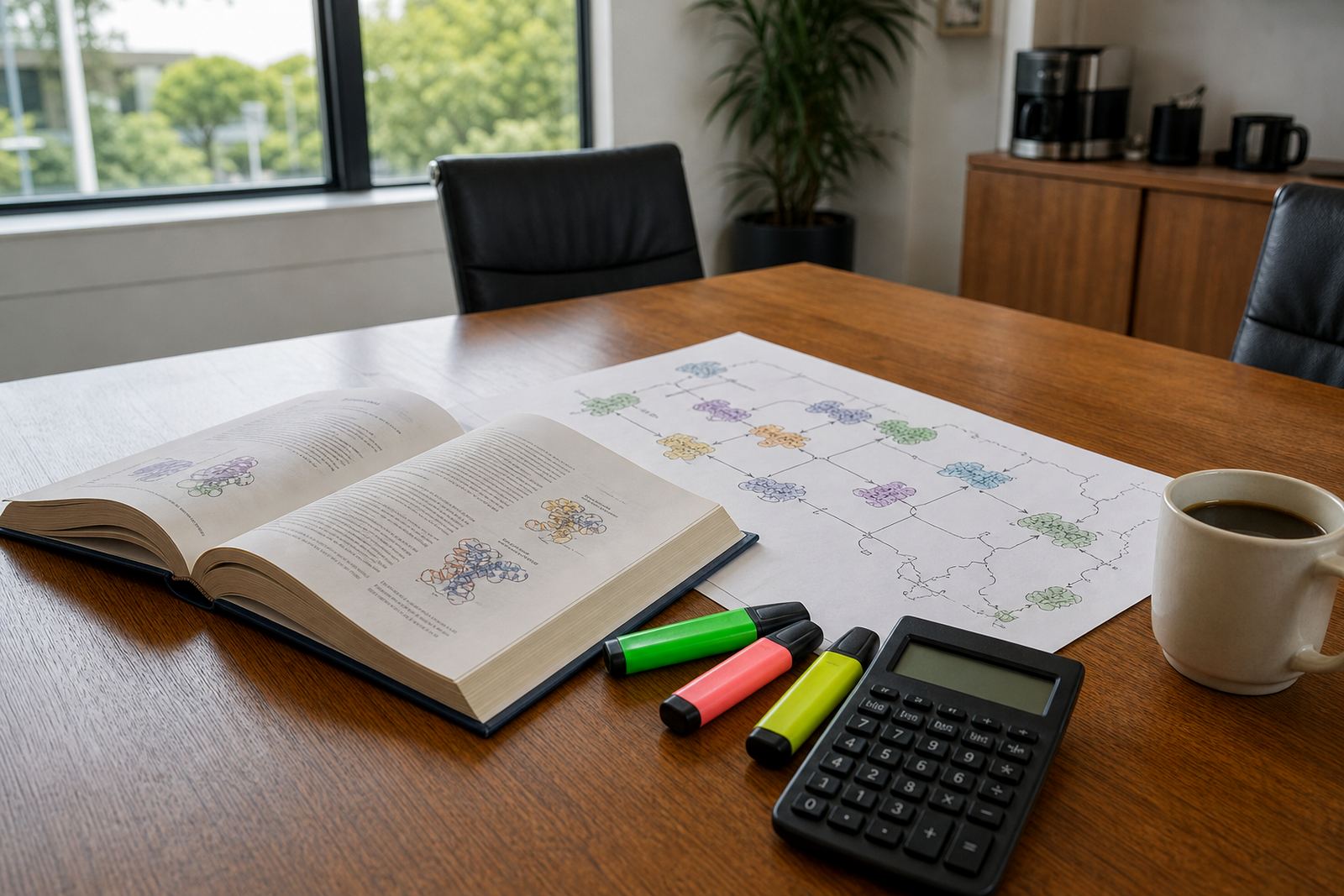
What the brief covers and why the distinction matters
CYP450 enzymes and medicine transporters are often discussed together because both can change how a medicine behaves in the body, but they are not the same thing. Enzymes mainly help break down or activate certain substances through chemical change, while transporters move medicines across cell membranes, into cells, out of cells, or into elimination pathways.
This brief is written for professionals who need a clean, careful summary when reading journal articles, compiling a teaching note, or explaining a pathway to a colleague. It is especially useful where a paper mentions inhibition, induction, uptake, efflux, first-pass metabolism, or genetic variation and the wording needs to stay precise.
For South African practice, that kind of clarity helps across public and private settings, from Cape Town and Johannesburg to Durban, Pretoria and Bloemfontein. It also helps when patients are using more than one prescribed medicine, over the counter products, or supplements, because the pathway being discussed should be named correctly before any interpretation is made.
Core content and common comparison points
The brief sets out the main differences in function, location and clinical relevance. It also shows where the two systems interact, because a medicine can be handled by both an enzyme and a transporter at different stages. The aim is to keep the science accurate without overcomplicating it.
- Enzymes: CYP450 enzymes mainly catalyse metabolic reactions, often in the liver and gut wall.
- Transporters: Transport proteins move compounds across membranes and can affect absorption, distribution and excretion.
- Interaction pattern: A medicine may be a substrate for one pathway, an inhibitor of another, or influenced by both at once.
- Clinical reading: The brief helps users tell whether a statement is about metabolism, movement, or both.
- Genetics: It explains why inherited differences can matter, while avoiding overstatement or diagnosis.
The language stays practical. Where a source uses broad terms such as drug interaction, the brief helps the reader check whether the effect is likely driven by enzyme activity, transporter activity, or a combined mechanism. That matters when preparing a plain-language summary for a multidisciplinary team or a case note for teaching.
Who uses it and where it fits in a practice workflow
This comparison brief suits clinicians, pharmacists, advanced practice nurses, wellness practitioners with a science-focused role, and educators who need to support careful discussion of medicine handling in the body. It also suits journal clubs, in-service education, student supervision and content review for learning packs.
Typical uses include reading a paper before a case discussion, checking wording in a handout, or building a slide for a training talk. In many practices, the biggest benefit is consistency, so everyone is using the same terms when speaking about metabolism and transport. That reduces confusion when a medicine interaction is being reviewed, especially if the source material is dense or uses older terminology.
- Useful for literature reviews and journal scans
- Suitable for case note development and educational briefs
- Helpful when preparing slide deck writing or curriculum support
- Works for team workshops in hospital, retail pharmacy, and training settings
- Supports plain-language summaries for mixed audiences
Formats and size options for different teams
The product is supplied as a comparison brief in a few practical lengths, so teams can choose the level of detail they need. A shorter version is useful for a quick meeting handout, while a longer version works better for teaching and file notes. If a team is busy, the plain-language summary can be used first and the fuller brief kept for reference.
- Quick brief: 2 to 4 pages, for rapid reading and staff huddles
- Standard brief: 6 to 10 pages, for most clinical and pharmacy teams
- Expanded brief: 12 to 18 pages, for training talks and teaching packs
- Plain-language summary: Short version for non-specialist readers
- Custom bundle: Brief plus reference list building, journal scan notes or slide text
All formats can be aligned to South African usage and audience level, whether the material is for Cape Town support teams, Pretoria meetings, or wider national circulation. The wording can be kept formal, or slightly more accessible where the audience includes mixed health and wellness practitioners.
What to check before you place an order
Before ordering, it helps to confirm the exact purpose of the brief and the level of detail required. A teaching handout for a pharmacy team is not the same as a short note for a wellness workshop, so the intended use should guide the structure. If you are building a file for internal use, it also helps to state whether the focus is general CYP450 comparison, a specific medicine class, or transporter versus enzyme terminology across several examples.
- Confirm the audience, for example clinicians, pharmacists, students or mixed staff
- State the page length you want and whether a summary is needed
- List any medicines, classes, or pathway terms that must be included
- Say whether the tone should be technical or plain-language
- Share any house style rules for headings, references, or terminology
- Note if the brief is for a talk, a handout, a case note, or an internal review
Clients reach the team through the enquiry form on the contact page. That keeps the request in one place and helps the team match the brief to the right format, especially when a project needs a quick turnaround for a meeting or training session.
Care, updating and practical use over time
Because this is an educational science brief, its value comes from careful wording and current general knowledge. Medicines science changes over time, so the best practice is to review the brief when a team updates its teaching file or when new terminology needs to be reflected. The content should not be treated as personal medical advice, and it should not replace a consultation with a doctor or pharmacist about any medicine.
For ongoing use, keep the brief with other teaching material, reference lists and meeting notes so it can be used consistently across branches and teams. If the document is being printed for regular use, store it in a dry place away from direct sunlight, which is sensible in Cape Town humidity and during load shedding periods when equipment and printing schedules can be disrupted. There is no special power or gas requirement because this is a written educational product, though teams may want a back up charging plan for laptops or projectors when preparing talks.
When questions arise, the safest practice is to refer back to the source literature and to the practitioner responsible for the medicines discussion. That keeps the focus on accurate explanation rather than guesswork, and it helps teams talk about enzyme and transporter pathways with more confidence.
Key facts
| Product type | Educational comparison brief |
|---|---|
| Focus | CYP450 enzymes versus medicine transporters |
| Typical lengths | 2 to 4 pages, 6 to 10 pages, or 12 to 18 pages |
| Format options | Brief, summary, teaching note, or workshop pack |
| Audience | Clinicians, pharmacists, wellness practitioners, educators |
| Availability | Prepared from general accepted science and tailored to request |