
Why the Pretoria team asked for the brief
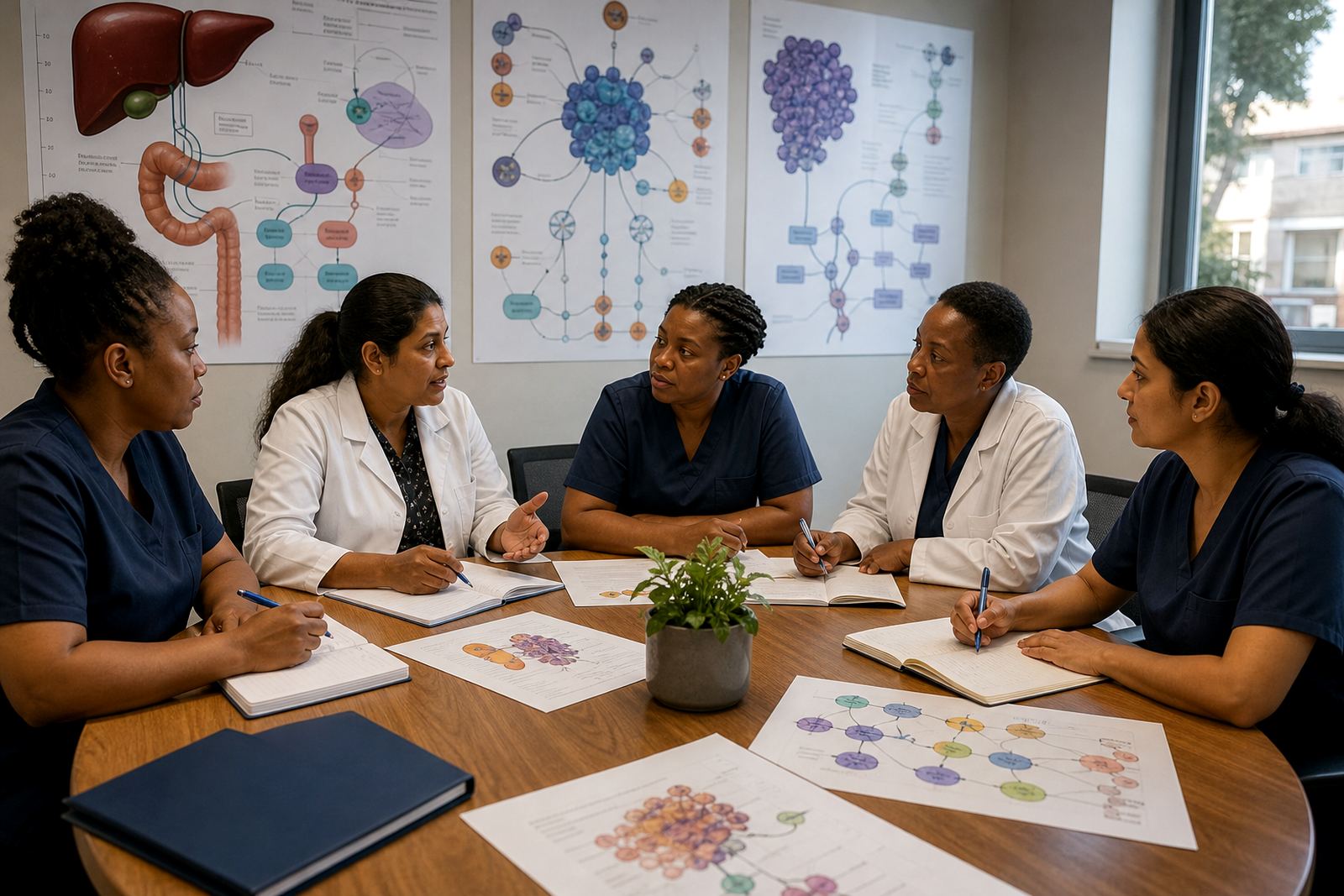
The client was a hospital education team in Pretoria planning medicine safety teaching for staff who needed a better handle on cytochrome P450 pathways. Their goal was practical: turn a complicated topic into a summary that could support ward teaching, in-service sessions and quick reference notes without making claims that went beyond accepted science. They also wanted something that would fit a busy hospital setting, where staff may only have a few minutes between rounds, calls and paperwork.
The topic set was broad enough to cover the major CYP450 ideas that matter in day-to-day care, including enzyme metabolism, drug-enzyme interactions and why some medicines behave differently in different people. The brief had to be careful, neutral and easy to use by mixed audiences, from pharmacists to nurses to junior doctors. It also needed to reflect South African practice realities, including common access issues and the fact that patients often use more than one medicine at once.
What the brief had to cover and what it could not
The scope was educational only. We were asked to prepare a hospital learning summary, not a diagnostic tool, not a treatment plan and not a substitute for clinical judgement. No personal medical advice was included, and no dosing advice was given. The language had to stay general, because CYP450 pathways can affect many medicines differently and the right response always depends on the full clinical picture.
- Clear explanation of CYP450 enzyme families and why they matter in medicine response
- Plain notes on inhibitors, inducers and substrate medicines
- General interaction themes that clinicians should check with a pharmacist or trusted reference
- Warnings about the limits of one-size-fits-all teaching in busy hospital care
- Reminder for readers to speak to their own doctor or pharmacist about their medicines
We also avoided overclaiming about genes, supplements and health outcomes. That restraint matters in a hospital setting where staff need reliable wording, not shortcuts. One small note in the source discussion was that CYP450 does not explain every interaction, and the final brief made that point plainly.
How we prepared the literature review and teaching notes
The project was handled over three weeks from first scoping to final handover. In week one we mapped the requested teaching topics and set the tone for a hospital audience. In week two we prepared the literature review notes and grouped the key facts into a teaching flow that could be followed in one sitting. In week three we refined the plain-language summary, checked the reference list structure and adjusted the wording so it read cleanly for staff with different levels of science background.
Our supply included a literature review summary, an educational brief, a plain-language teaching version and a clean reference pack for later use. We also helped shape the headings so the material could be split into smaller sections for handouts or slide use. The result was a document that was easier to teach from and easier to file for future staff sessions, which saves time when the next round of induction comes around.
- Topic scoping and outline planning
- Literature review synthesis from established general knowledge
- Plain-language rewrite for staff education
- Reference list building for internal use
- Review of wording for caution, accuracy and readability
Working conditions, approvals and local hospital realities
Pretoria hospital teams work under real pressure, so the brief had to be practical from the start. Teaching materials often need to fit short sessions, limited screen time and interruptions from clinical work. We kept the formatting simple enough for ward use and avoided long blocks of dense text. The summary also needed to work in a setting where staff members may be dealing with load-shedding disruptions, device charging limits and changing rota schedules.
We also kept the language suitable for South African clinical education, where staff may ask how the science links to everyday prescribing and counselling. The brief did not try to force answers where the evidence is still complex. Instead, it gave staff a stable base for discussion and a list of points to check against their own protocols and trusted references. That approach is often the safest one, especialy when the audience includes both senior and junior staff.
What changed after the brief was supplied
Once the education summary was handed over, the hospital team had a cleaner way to introduce CYP450 teaching in internal sessions. The material was structured so it could be used as a short briefing note, expanded into a talk, or broken into smaller teaching sections for different departments. That flexibility mattered because medicine safety topics are often shared in fragments, not in one long formal lecture.
The main result was better clarity. Staff could focus on the core ideas without getting lost in unnecessary technical detail, while still seeing how CYP450 enzymes fit into medicine response and interaction screening. The brief also gave the team a consistent way to speak about uncertainty, which is important in medicine education. Not every question has a quick answer, and a well written summary should say so plainly.
- More usable teaching language for mixed clinical audiences
- Better structure for short hospital education sessions
- Clearer boundaries between general science and patient-specific advice
- A reference base that could be reused for future staff teaching
What we would do again for another hospital project
We would take the same approach again for any hospital in Pretoria, Cape Town, Johannesburg, Durban or Bloemfontein that needs CYP450 teaching support. Start with the exact staff need, keep the science within established knowledge, and build the brief around the questions the team actually has. That makes the final material easier to use and less likely to drift into overstatement.
We would also keep the format lean, with a short summary, a teaching version and a reference pack. For hospital education, that combination works well because different users need different levels of detail. Clinicians may want the quick summary first, while pharmacists and educators may want the deeper notes behind it. The job is not to impress people with jargon, but to help them use the science responsibly in everyday work.
If your team needs a similar CYP450 education brief, we can prepare literature reviews, plain-language summaries, training notes and workshop content for staff across South Africa. For enquiries, use the contact form on our contact page.
Key facts
| Project type | Hospital education brief and literature review support |
|---|---|
| Client location | Pretoria |
| Audience | Clinicians, pharmacists and wellness practitioners |
| Subject | CYP450 enzymes, medicine interactions and teaching support |
| Timeline | 3 weeks |
| Deliverables | Literature review, educational brief, plain-language summary, reference pack |