Why food comes up in CYP450 teaching
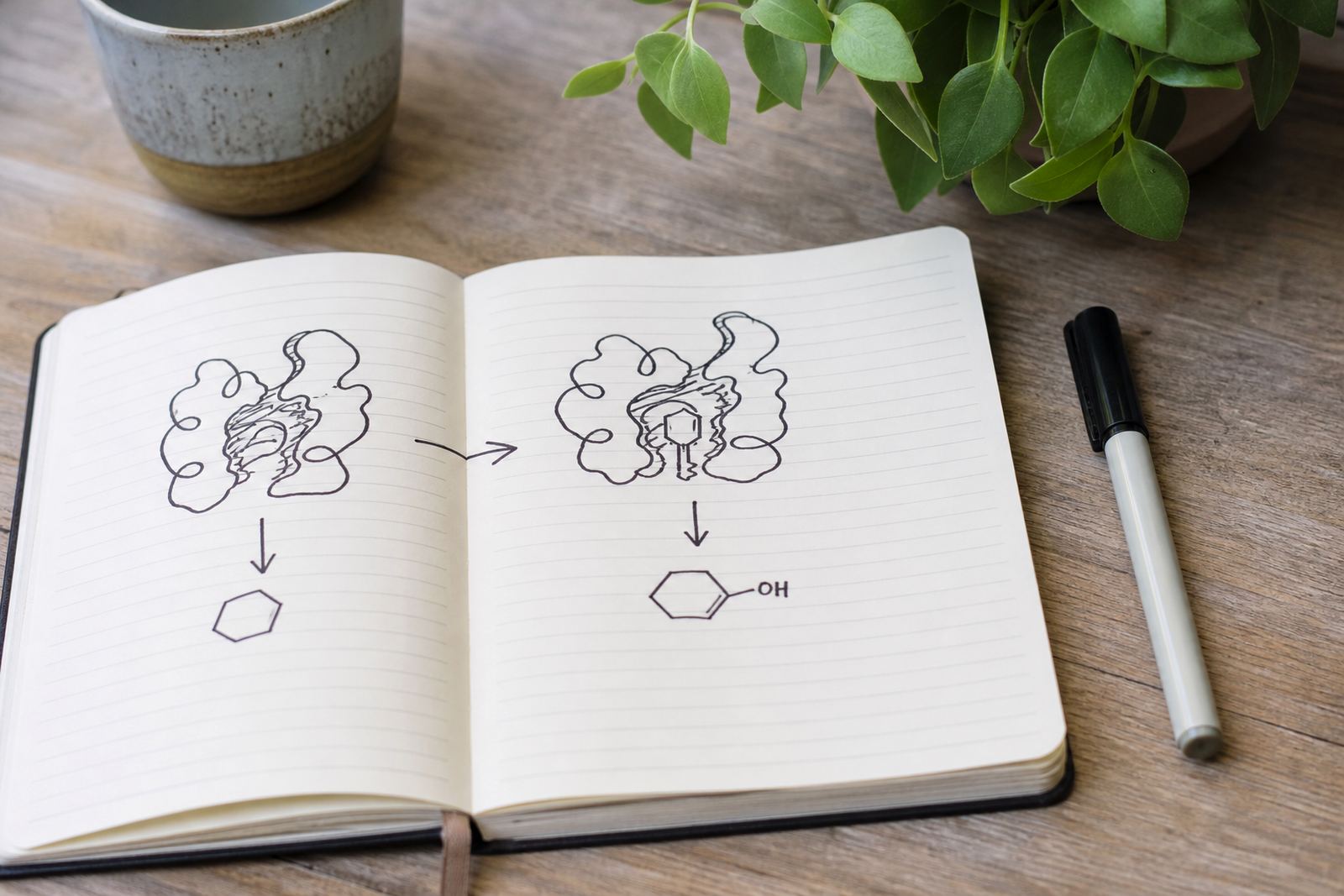
CYP450 enzymes help the body process many medicines and other substances. When learners hear that an enzyme is involved, the next question is often about food, because people do not take medicines in a vacuum. They eat meals, drink tea or coffee, use supplements and follow habits shaped by family, work and culture.
That is why food interaction questions are so common in education briefs and training talks. A meal may affect absorption, gut movement or the way a medicine is handled before it reaches the bloodstream. In some cases, food can also affect enzymes and transporters in ways that change how a medicine behaves. The point is not that food is always a problem. The point is that food is part of the picture and should be considered carefully.
What food can change, and what it cannot
It helps to separate the main ideas clearly. Food may change how quickly a medicine is absorbed, whether it causes stomach irritation and how much of the active substance reaches the body. Some foods or plant products may also influence enzyme activity. That does not mean every item in a diet has a meaningful interaction, and it does not mean every interaction is clinically important.
- Some medicines are best taken with food to reduce stomach upset.
- Some are absorbed better on an empty stomach.
- Some food components may slow or change breakdown in the gut or liver.
- Some interactions are based on enzyme pathways, while others involve transporters or simple timing issues.
For clinicians and pharmacists, the practical question is not just whether food interacts, but whether the interaction matters enough to change counselling. For wellness practitioners, the safest route is to stay with general education and refer medicine-specific questions to the person’s doctor or pharmacist.
Why CYP450 is only part of the answer
CYP450 enzymes are important, but they are not the only factor in food and medicine questions. A discussion can also involve stomach acidity, bile flow, liver function, gut transporters, the person’s age and other medicines they take. That is why two people can eat the same meal and still have very different responses to the same medicine.
It is also why broad statements can be misleading. Saying that a food “blocks” a medicine or that a herb “always interferes” oversimplifies a system that is more complex. Educational material works best when it explains the pathway and then notes the limits of current general knowledge. Careful wording matters because readers may use the information to guide decisions about essential medicines, and that should never be done casually.
When our team prepares a summary, we try to keep the line clear: CYP450 pathways help explain possible interactions, but they do not replace proper clinical review. Patients should speak to their own doctor or pharmacist about their medicines, especially if they use multiple prescriptions or over-the-counter products.
Everyday South African food questions in context
In South Africa, food habits vary widely between households, towns and workplaces. A person in Rondebosch may ask about morning coffee with medication, while someone in Durban may ask about herbal teas, spicy meals or timing around shift work. In Johannesburg and Pretoria, long commutes often shape when people eat. In Bloemfontein, family routines and seasonal eating patterns may affect how medicines are taken day to day.
These are not abstract questions. They are the real-life context in which enzyme education has to make sense. A clear explanation should respect local habits without jumping to conclusions. It should ask what the food is, how often it is used, what medicine is involved and whether there are any other health conditions. That practical approach is more useful than broad warnings that do not fit the situation.
- Coffee, tea and energy drinks may raise timing questions for some medicines.
- High-fat meals may change absorption for certain products.
- Herbal mixtures and traditional preparations need careful review.
- Regular meal patterns can matter as much as the food itself.
How to read food interaction information carefully
Readers often see food warnings in patient leaflets, clinic notes or online summaries. The challenge is to judge what kind of caution is being given. Some notes are based on known enzyme pathways. Others are there to support general use, because the product has a narrow therapeutic range or because consistent intake matters. A good summary explains the reason behind the advice instead of repeating a warning without context.
For education work, this means asking a few simple questions. Is the interaction based on absorption, enzyme activity or a non-specific effect? Is the advice about avoiding a food completely, or just taking the medicine at a different time? Is the evidence strong, moderate or based on theoretical concern? These distinctions help readers avoid overreacting to every warning label they see.
- Look for the mechanism, not only the warning.
- Check whether the advice is medicine specific.
- Note if the concern is theoretical or well established.
- Keep the full medicine list in view, not just one product.
What careful education should leave people with
The best food interaction education leaves people more informed, not more anxious. It should show that meals, herbs and medicines can influence one another, but also that context decides the importance. A simple meal with a common medicine may need no special action. Another combination may need timing advice, closer review or a different counselling approach from a pharmacist or doctor.
For clinicians, pharmacists and wellness practitioners, the most useful habit is to treat food questions as a prompt for better history taking. Ask what the person actually eats, what else they take, and what they understand about their medicines. In Cape Town and across South Africa, that kind of practical conversation is often the difference between confusion and clarity. And if the question is about a specific medicine or symptom, the person should be referred back to their own doctor or pharmacist for individual guidance.