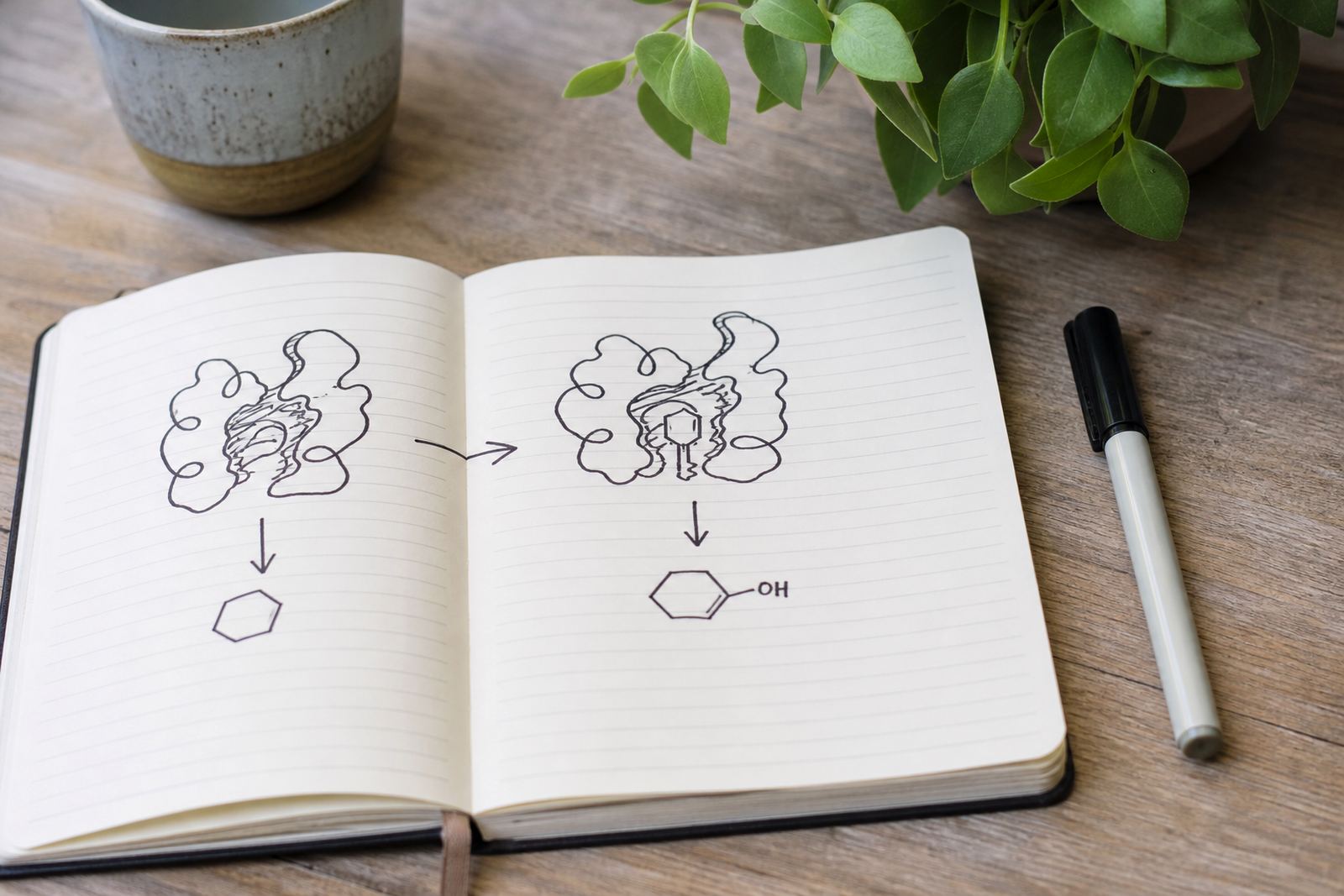
What a prodrug is and why it matters
A prodrug is a medicine that needs to be changed by the body before it can do its main job. In simple terms, the swallowed or injected form is not yet the final active substance. Enzymes in the liver, gut wall and sometimes other tissues convert it into the form that can act on its target.
This matters because the response depends on more than the dose on the box. The person’s genetics, liver function, age, other medicines and even food choices can all affect how much active medicine is formed. For clinicians and pharmacists, that means a prodrug deserves the same careful review as any other medicine, sometimes more so.
How CYP450 enzymes fit into activation
CYP450 enzymes are a large family of drug-metabolising enzymes. Some prodrugs are activated partly or mainly by a specific CYP enzyme, while others rely on a different pathway or more than one step. If a person has reduced enzyme activity, less active medicine may be formed. If another medicine blocks the same enzyme, the effect can be similar.
Not every prodrug depends on CYP450, so it helps to check the individual medicine rather than assume the pathway. This is where clear literature reviews and plain-language summaries are useful, especially when the same drug is being used across different specialties.
- Some prodrugs need a single activation step.
- Others are changed in stages before they become active.
- Enzyme inhibition can reduce activation and change the expected response.
- Genetic variation can make activation slower or, less commonly, faster.
Common reasons activation can vary from person to person
Prodrug handling is not the same in every patient. The liver is a major site of activation, so anything that affects liver enzyme function can matter. Interactions are especially important when a person is already taking several medicines, which is common in chronic care.
Practical points to consider include the following:
- Genetic differences in enzyme activity, which can be inherited.
- Other medicines that block or induce the same pathway.
- Liver disease or reduced liver function.
- Age related changes, including in older adults.
- Gut factors such as food, digestive illness or altered absorption.
In real life, the question is not only whether a medicine is a prodrug, but whether the pathway is intact enough for it to work as intended. A careful medicine history helps. So does checking for over the counter products and supplements, which are often left out unless they are asked about directly.
A South African example: clopidogrel in everyday practice
A familiar local example is clopidogrel, which needs activation before it can do its anti-platelet work. If activation is reduced, the expected effect may be less predictable. That is why interaction checking matters when a patient is also using other medicines that can interfere with CYP pathways.
In a Cape Town clinic, a pharmacist may be reviewing a discharge script after a cardiac event, while the patient also mentions a stomach acid medicine and a herbal tonic from home. The right response is not guesswork. It is to review the full medicine list, consider the activation pathway, and speak to the treating doctor or pharmacist about whether the combination is suitable for that individual.
This kind of review is especially useful in South Africa, where patients may move between public and private care, collect medicines from more than one pharmacy, and use traditional or wellness products alongside prescribed treatment. Clear records help reduce missed interactions.
What clinicians and pharmacists should check first
When a medicine is known to need metabolic activation, the first step is usually to identify the pathway and any likely interaction risks. Then check whether the medicine is being used for a high stakes indication, where small changes in effect may matter more. A plain-language note can help the rest of the team understand why the medicine was chosen and what to watch for.
Useful checks often include:
- Which enzyme or enzymes activate the medicine.
- Whether any current medicine may inhibit or induce that pathway.
- Whether the patient has liver disease or other factors affecting metabolism.
- Whether the medicine has an alternative that does not rely on the same activation step.
- Whether the patient has been told when to raise concerns with their doctor or pharmacist.
For educational work, it helps to explain that a prodrug is not automatically better or worse than another medicine. It is simply a different design, and that design has strengths and limits.
Why plain-language education helps patients and teams
Patients often hear that a medicine is an “inactive” tablet and assume it will not work. Others hear the word “enzyme” and think it only matters in rare specialist cases. Neither is true. Many commonly used medicines depend on metabolism somewhere along the way, and the explanation should be simple enough for patients, but accurate enough for clinicians.
Plain-language summaries are useful when teams need to explain:
- Why one medicine may work differently from another in the same class.
- Why interaction checks are important even when the box instructions look routine.
- Why the doctor or pharmacist may ask about all medicines, including supplements and traditional products.
- Why a change in response does not always mean the medicine is “bad”, just that the pathway needs review.
For South African practice, this kind of education supports safer handover between prescribers, dispensers and patients. It also keeps the focus on careful review rather than alarm.