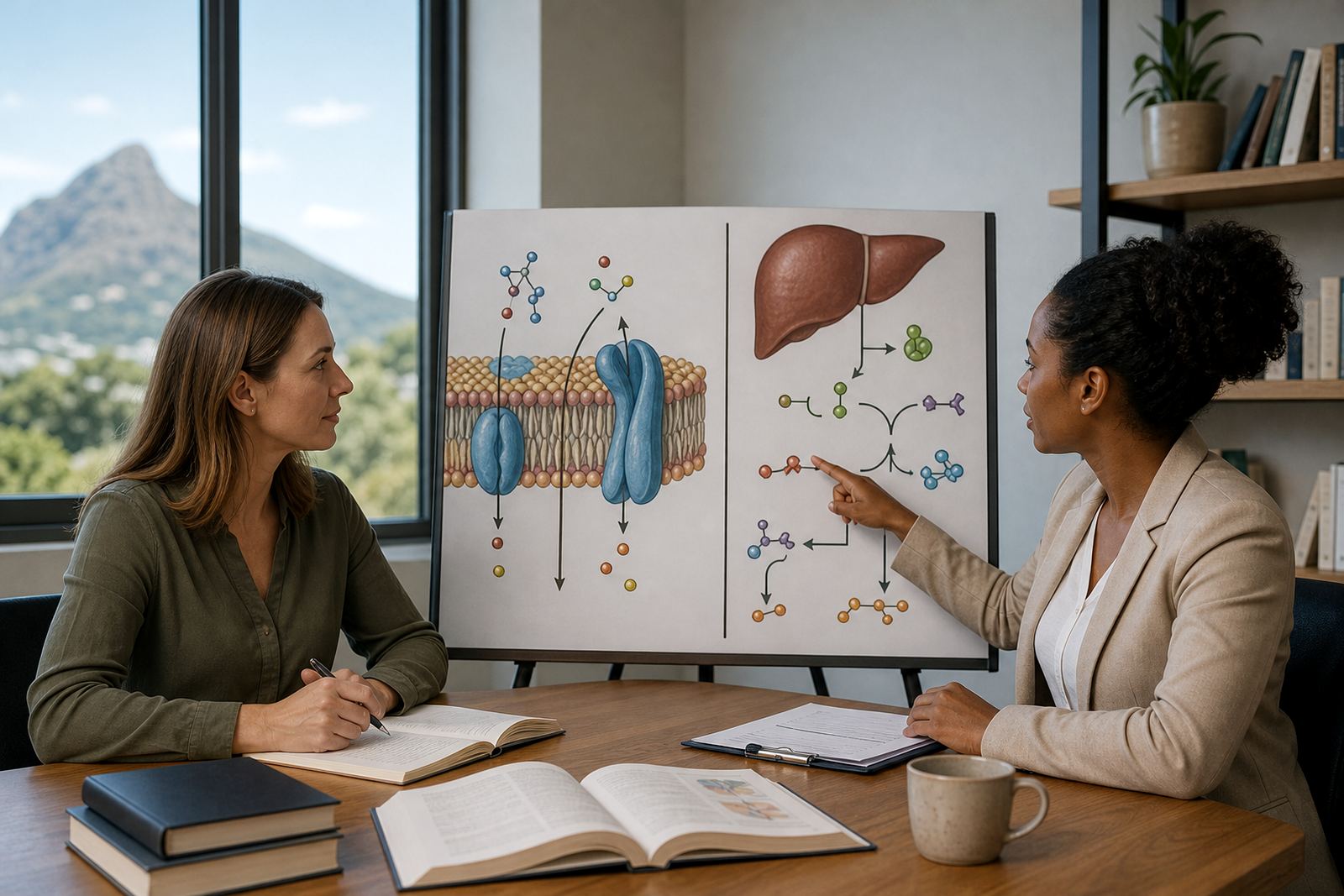


Start With What the Enzymes Actually Do
When you are talking to a patient, begin with the simplest idea: CYP450 enzymes are part of the body’s normal chemistry and help process many medicines and other substances. They are found mainly in the liver, and some also work in the gut, where they can change how much of a medicine reaches the rest of the body.
A plain-language explanation often works best when you link the enzyme to a job the person already understands. For example, you can say it acts like a processing team that helps the body break down certain medicines. That is usually clearer than opening with gene names, enzyme families, or pathway diagrams.
- Use everyday words first, then add the technical term if needed.
- Keep the explanation to one or two sentences before checking understanding.
- Say what the enzyme does, not what it does not do.
Use Medicine Examples Without Turning It Into a Lecture
Do not overload people with the full CYP450 family tree unless they have asked for it. For most patients, the best communication style is short, calm and careful. You can explain that enzymes help the body process medicines, and that genes, other medicines, food, alcohol and some health conditions may affect that process. That is enough for many conversations.
It also helps to avoid words that sound alarming. Instead of saying a medicine is “bad” or “unsafe”, say that some medicines need closer attention because they can interact with the body’s processing system. This keeps the tone steady and avoids confusion.
- Replace jargon with familiar language such as process, break down, handle or clear.
- Pause often and invite questions.
- Use one idea per sentence when the topic is new to the patient.
Handle Genetics With Care and Clarity
People hear a lot about genetics, but CYP450 genetics should be explained carefully. A genetic difference can affect how an enzyme works, yet it does not tell the whole story. Medicines, age, liver health, smoking, diet and other factors may all play a role. For that reason, it is best to present genetics as one piece of the picture, not the answer to everything.
When speaking to patients, a useful line is: genes can influence how the body processes some medicines, but your doctor or pharmacist is the right person to interpret your specific medicines and history. That keeps the discussion accurate and avoids stepping into diagnosis or treatment advice.
It can also help to explain that a gene result, where available, is only useful when read in context. A result on its own is not a treatment plan. That point matters in busy settings across Johannesburg, Pretoria, Durban and Bloemfontein, where patients may come in with printouts or screenshots and need a steady explanation.
Use a Simple Structure for Every Conversation
Many patient discussions go better if you follow the same pattern each time. Start with the main idea, explain why it matters, then invite questions. This approach works well whether you are speaking in a consultation room, during a pharmacy handover or in a group education session. It also helps when the patient is anxious, because the structure gives them something to hold onto.
Try this order:
- What the enzyme does in simple terms.
- Why it matters for their medicine discussion.
- What should be checked with the doctor or pharmacist.
- What questions the patient would like answered.
This structure is especially useful when patients have mixed information from the internet. It allows you to correct confusion without sounding dismissive. A patient in Claremont might arrive with a long list of questions about herbs, supplements and prescription medicines. A clear, step by step explanation is usually more helpful than a long warning list.
Make the Message Fit the Room You Are In
The setting changes how much detail a patient can take in. In a short pharmacy conversation, one clear sentence may be enough. In a longer clinic visit or a training talk, you can add more context, but the same plain-language rule still applies. Good communication is not about using fewer facts, it is about putting the facts in the right order.
For teams working in Cape Town and across South Africa, it can help to prepare a short explanation that everyone uses in the same way. That way patients hear consistent language whether they speak to the doctor, pharmacist or a trained educator. Consistency matters, especially when the topic includes medicine interactions and genetic differences.
Most importantly, keep the patient anchored to the right next step. If the question is about a medicine or possible interaction, they should speak to their own doctor or pharmacist. That is the safest and clearest ending to the conversation.