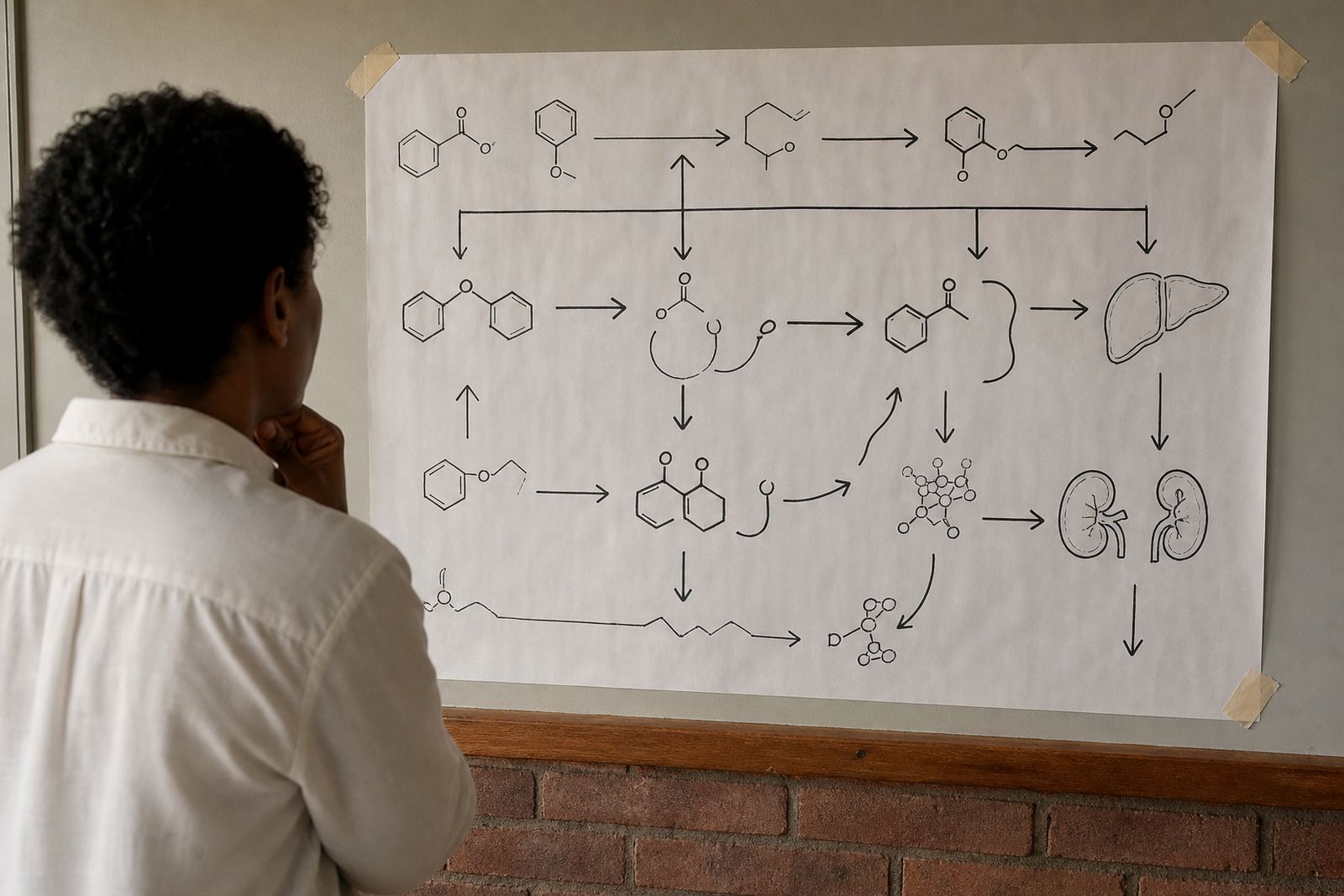


Why hypothetical cases sharpen CYP450 reasoning
Interaction teaching works best when the group can slow down and ask what the enzyme system is actually doing. CYP450 enzymes help break down many medicines, so a change in one pathway can alter how a medicine is processed, sometimes in a mild way and sometimes enough to matter clinically.
A good teaching case does not need drama. In fact, a simple story is often better because it makes the reasoning visible. One person notices a new medicine, another spots a herbal product, and someone else asks whether liver function, age or smoking status could change the picture. That kind of discussion is more useful than a list of isolated facts.
For South African audiences, the value is practical. Clinicians, pharmacists and wellness practitioners often meet people who use prescribed medicines, over the counter products and traditional remedies together. A case format helps the team think through that mix without making assumptions.
How to build a case that teaches, not confuses
Keep the case short enough for discussion but complete enough to answer the basic questions. The goal is to help the group identify the enzyme pathway, the likely interaction type and the practical next step, if any, without drifting into diagnosis or treatment planning.
- Start with age, sex, relevant history and setting, for example a community pharmacy in Rondebosch or a clinic follow up in Durban.
- List every medicine and non prescription product, including herbal and supplement use.
- Include one or two factors that can change enzyme activity, such as smoking, liver disease, food intake or poor adherence.
- Ask a clear question, such as which interaction is most plausible or which item needs clarification from the prescriber.
- Keep the answer grounded in established CYP450 knowledge, not speculation.
It also helps to keep the language plain. A case should invite careful reading, not test whether people can remember jargon. If the group understands the pathway and the decision point, the teaching has worked.
A simple discussion frame for any interaction case
When a case comes up, use the same sequence each time. That consistency makes it easier for teams to compare cases and notice patterns across different medicines.
- Identify the medicines and products involved.
- Check which CYP450 enzymes may be relevant.
- Think about inhibition, induction or competition for metabolism.
- Ask whether the interaction is likely to be clinically meaningful in this situation.
- Consider what information is still missing.
- Decide who should be contacted next, usually the doctor or pharmacist responsible for the medicines.
This approach keeps the discussion practical. It also reminds the group that many interaction questions cannot be answered from a label alone. Route of administration, dose form, timing and the person’s full medicine list all matter, and the safest interpretation is often the cautious one until the facts are clear.
In training talks, this frame can be repeated with different examples until it becomes routine. That repetition is useful because CYP450 cases are rarely about one single enzyme. They often involve overlapping pathways and more than one factor at once.
Local example: a Cape Town case in a busy pharmacy
Picture a patient in Claremont collecting a prescription medicine and asking about a new over the counter product for sleep. The pharmacist also sees a herbal capsule on the medicine list and notes that the patient takes another long term medicine prescribed by a doctor in Cape Town. No diagnosis is made in the teaching discussion, and no one changes the medicine on the spot. The point is to reason through the interaction risk.
The group first checks whether any of the medicines are known substrates, inhibitors or inducers of common CYP450 enzymes. Then they ask whether the combination could change the exposure of one medicine enough to matter. If there is uncertainty, the next step is to clarify the product ingredients and ask the doctor or pharmacist who knows the full chart to review it.
This sort of case works well in South African teaching because it reflects real practice. People often use several products at once, and some ingredients are not obvious from the front label. A careful review protects the conversation from guesswork and keeps the focus on safe medicine use.
- What is the likely enzyme pathway?
- Which product could be the inhibitor or inducer?
- Is the concern theoretical or practically important here?
- What information is still missing from the medicine history?
- Who should review the full list before any action is taken?
Common teaching mistakes to avoid
Case learning can go wrong when the example becomes too neat. Real interaction work is often messy, and if the teaching case hides all the complexity it stops preparing people for actual consultations.
Another mistake is making the answer sound more certain than the evidence allows. CYP450 science is valuable because it helps explain patterns, but not every combination will lead to a meaningful interaction. A teaching article should show how to separate a theoretical issue from one that needs prompt review.
- Do not leave out supplements or traditional products.
- Do not assume all medicines in the same class behave the same way.
- Do not present one pathway without noting that others may also be involved.
- Do not turn a teaching case into personal medical advice.
- Do not skip the final step of referring the person back to their own doctor or pharmacist for medicine specific guidance.
That last point matters in every setting, from Bloemfontein to Johannesburg. Education should support better questions, not replace individual clinical judgement.
Turning case discussion into better team learning
Once the discussion is over, capture the main reasoning points while they are still fresh. A short note on what was learned, what was uncertain and what should be checked next can help the team build a usable reference for future sessions. Over time, that becomes a practical library of interaction examples.
For organisations that train pharmacists, clinicians and wellness practitioners, a good case archive can support journal scans, brief handouts, slide decks and team workshops. The aim is not to memorise every enzyme. It is to build a repeatable habit of asking the right questions, reading the medicine list carefully and recognising when to pause before assuming a product is harmless.
That habit is what makes interaction case learning worthwhile. The case may be hypothetical, but the reasoning it teaches is the same reasoning used in everyday practice.