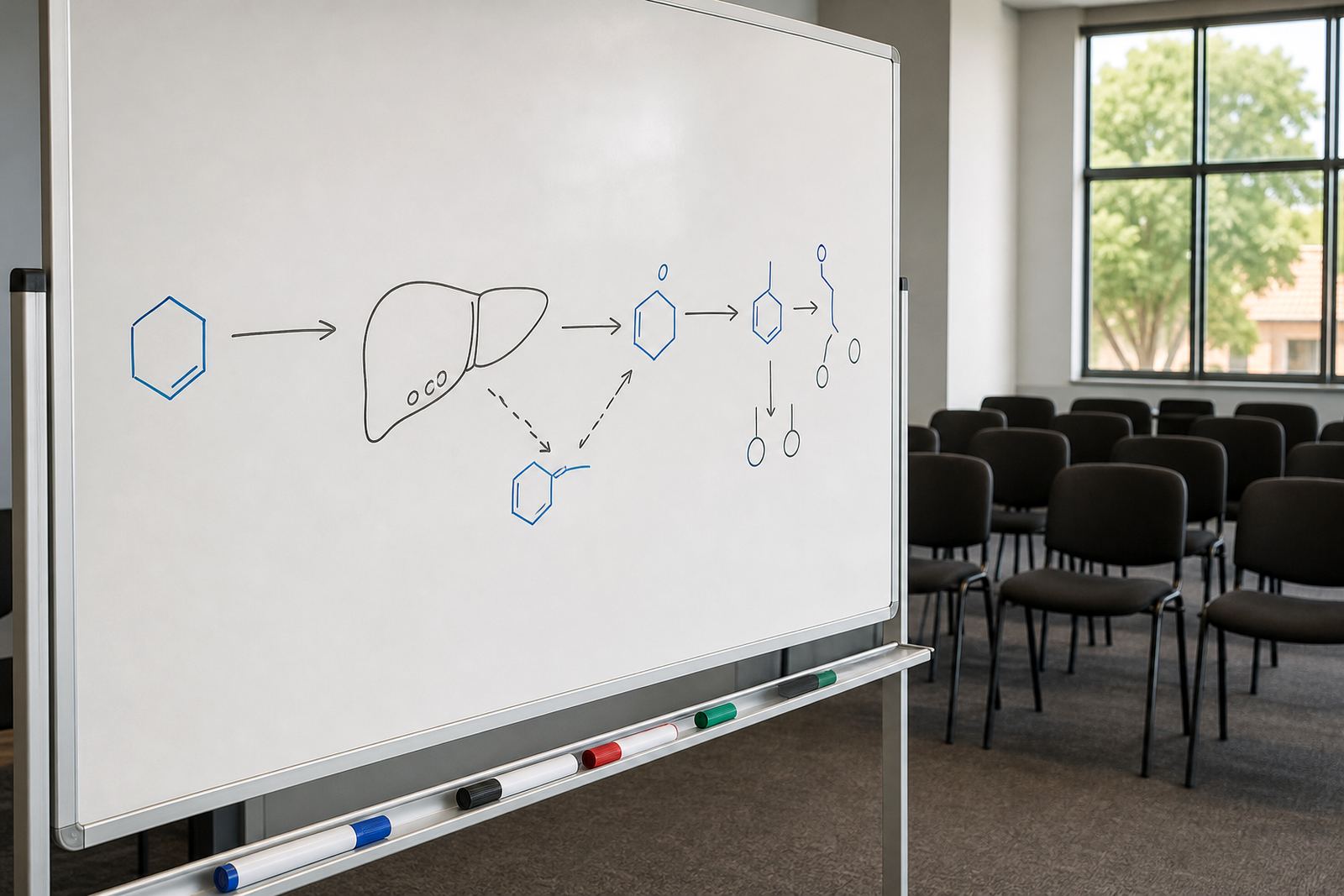
What the CYP2B6 Overview covers
This brief explains CYP2B6 in plain language, starting with the enzyme’s role in drug metabolism and then moving through the main reasons activity can differ between people. It gives a grounded summary of how genetics, other medicines and broader clinical context can affect enzyme function, without overstating what can be concluded from a single result or one published paper.
It is written as a general educational resource for South African readers who need something practical for consultations, staff teaching or internal reference. The content stays within widely accepted general knowledge and does not make diagnosis, dosing or treatment claims. If a patient has questions about their medicines, they should speak to their own doctor or pharmacist.
- Plain-language explanation of CYP2B6 function
- General notes on variability and enzyme activity
- Medicines and pathways commonly discussed in CYP2B6 contexts
- Useful framing for clinical teams, support staff and training groups
Who it suits across South Africa
This overview suits clinicians, pharmacists and wellness practitioners in Cape Town, Johannesburg, Pretoria, Durban and Bloemfontein who need a quick but careful summary for everyday professional use. It also helps training coordinators and content teams that prepare internal notes, patient handouts or seminar material on cytochrome pathways.
The brief is useful when a team needs a common language for talking about metabolism, interaction checks and the limits of interpretation. In practice, it works well for case discussion, journal review meetings and orientation of new staff. It does not replace a full medication review or any personl clinical assessment, and it should be read alongside current local prescribing guidance.
- Clinics and private practices
- Pharmacy teams and medication review groups
- Educational programmes and CPD style talks
- Wellness and nutrition practitioners working within scope
Format, sizes and option choices
The CYP2B6 Overview is available in practical format options so teams can choose the level of detail they need. Some readers want a short briefing note for quick reference, while others prefer a fuller version with extra context and a more complete reference list. The structure stays readable either way, with headings, concise explanations and plain terms where possible.
Options can be tailored for different audiences, from a compact handout for meetings to a longer internal learning note for education sessions. The focus is on clarity, not volume, so the language stays careful and the science remains easy to follow. Where needed, the brief can be adapted to align with South African practice settings, including public sector workflows and private practice use.
- Short brief for fast reading and team circulation
- Standard overview for clinical and pharmacy use
- Extended version with added background and references
- Audience-specific wording for professional or training use
Where it fits in your workflow
This brief fits neatly into literature review packets, educational folders and case note preparation. It is also useful when a team wants a simple explanation for interaction checks, medicine discussions or staff teaching on enzyme pathways. The information is general, so it can be used as a starting point rather than a final clinical answer.
In a busy Cape Town practice, or a multi-site team moving between Johannesburg and Pretoria, a concise CYP2B6 summary helps keep everyone on the same page. It is also handy for webinar slides, induction packs and reference folders that need a dependable overview. Readers should still check the patient’s own medicines carefully and speak to the treating doctor or pharmacist for personal advice.
- Internal learning packs and staff orientation
- Medicine review support and interaction discussions
- Lecture notes, slide decks and workshop handouts
- Reference material for clinical administration teams
Care, updating and reference support
Because CYP2B6 science sits inside a changing evidence base, the brief is best used with regular review. This matters where new medicine guidance appears, or where a practice wants its teaching notes kept current for South African use. The writing is designed to be easy to update without losing the original clinical tone.
For teams that keep educational files on shared drives, the document can be refreshed as part of a normal content review cycle. There is no special storage need, power supply or gas requirement, but if the brief is printed for meetings it should be filed with the version date visible. That makes it easier to track what is current and what needs replacing, especially in larger teams with staff turnover.
- Keep the version date visible on printed copies
- Review references when medicine guidance changes
- Use alongside current local prescribing resources
- Refresh training material before repeat workshops
What to check when ordering
Before requesting a CYP2B6 Overview, confirm the intended audience, the preferred length and whether the brief is for a clinician, pharmacist or broader wellness group. It also helps to note whether the team wants a short summary, a teaching note or a more detailed literature-facing version with a fuller reference list. Clear instructions at the start save time later and keep the final document aligned with your purpose.
Where a team needs support for a meeting in Claremont, Newlands or the Rondebosch base, the scope can be set around the discussion topic and the reading level required. Clients reach the team through the enquiry form on the contact page, and the brief can then be prepared to match the intended use. If a case involves medicines, the reader should still consult their own doctor or pharmacist for personal advice.
- Audience and level of detail
- Target length and preferred format
- Need for references, tables or summary notes
- Whether the brief is for training, review or internal circulation
Key facts
| Product type | Educational CYP2B6 literature brief |
|---|---|
| Typical length | Short, standard or extended options |
| Format | Plain-language summary with headings and references |
| Primary users | Clinicians, pharmacists and wellness practitioners |
| Use case | Teaching, literature review and interaction discussion support |
| Coverage | CYP2B6 activity, variability and general medicine relevance |