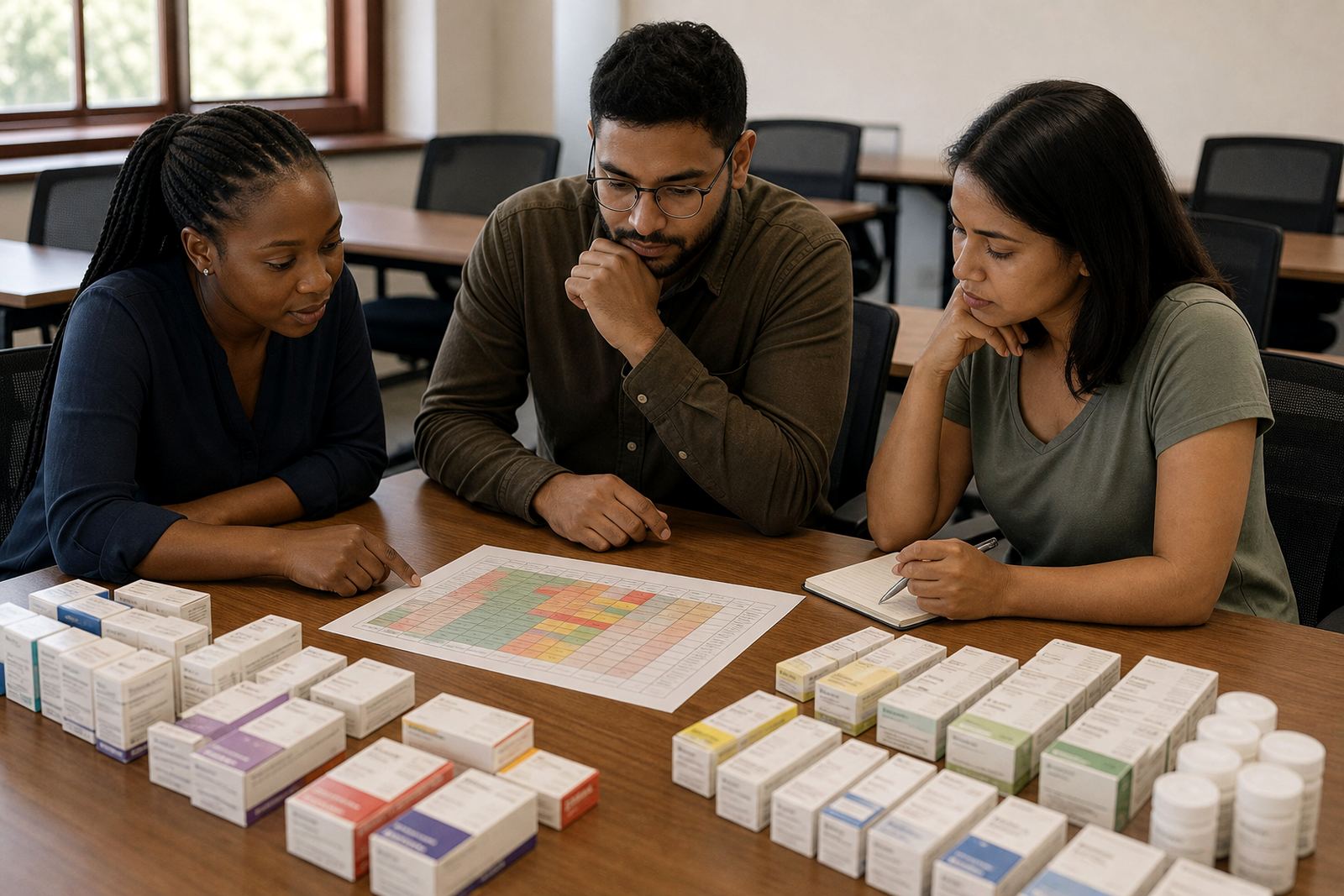


What Food and CYP Covers in Practice
Food and CYP is a literature-led teaching resource focused on how foods, beverages and dietary patterns can affect cytochrome P450 enzymes in general terms. It is written for South African professionals who need a careful summary of enzyme pathways, not a treatment plan or a medicine recommendation. The content helps teams talk through common concepts such as inhibition, induction and variability in response without overstating what food can or cannot do.
The material is useful when a client asks why a medicine may behave differently around meals, grapefruit products, herbal teas or long-term diet patterns. It stays within established general knowledge and points readers back to their own doctor or pharmacist for any medicine-specific guidance.
- General CYP pathway explanations in plain English
- Common food and drink interaction concepts
- Teaching notes for clinical and wellness settings
- South African context for mixed patient and client groups
Format Options and Teaching Sizes
Food and CYP is supplied as a flexible education package, with size options depending on how much detail your team needs. A short brief suits quick team updates, while a fuller review is better for journal clubs, pharmacist training, clinic orientation or wellness practitioner workshops. Each version is written for readability and can be used as a handout, internal teaching note or part of a longer training talk.
Typical options include a compact 2 to 4 page summary, a standard 6 to 10 page brief, or a more detailed review pack for internal training. If your group works across Cape Town, Johannesburg, Pretoria, Durban or Bloemfontein, the material can be adjusted to suit mixed audiences and local terminology. It is especially useful where staff need something practical for routine counselling and education, not a dense research file.
- Short brief: 2 to 4 pages
- Standard brief: 6 to 10 pages
- Extended review pack for workshops and CPD style talks
- Plain-language or clinician-focused tone available
Where It Suits Best
This product suits practices, pharmacies, training rooms, university groups and wellness teams that need a dependable overview of food related CYP teaching. It is a good fit for settings where clients ask about food interactions often, especially in busy metros where people are using several products at once and still want a clear explanation. In Rondebosch and nearby areas such as Claremont and Newlands, it also works well for small group meetings and academic discussions.
Teams often use it when preparing induction notes, staff refreshers or patient education sessions. Because the subject can come up in many areas of practice, the brief is written so that it can sit alongside counselling notes, protocol reviews and shared learning sessions without being overtechnical.
- Community and retail pharmacy teams
- Medical and wellness practitioners
- Clinic educators and study groups
- Internal training, orientation and journal scans
Installation, Access and Working Requirements
There is no hardware installation, power supply or gas requirement for Food and CYP. The product is an information and training resource, supplied for reading, review and teaching use only. Access is arranged through the enquiry form on the contact page, after which the scope, audience and preferred format are confirmed. If you need a version for a morning session in Cape Town or a hybrid staff meeting across provinces, the brief can be prepared in a format that is easy to circulate and discuss.
For teams that want the content integrated into an existing programme, it can be structured as a standalone brief, a slide support note or a workshop handout. No special equipment is needed other than the usual office setup and a device for reading or presenting the material.
- No power or gas requirements
- No site setup needed
- Supplied as a readable education document
- Suitable for print, screen or training folders
Care, Updating and Review Cycles
Because CYP teaching depends on current general knowledge, Food and CYP should be reviewed periodically as part of normal educational upkeep. For clinics and training teams, that means checking whether the brief still reflects accepted terminology and whether any sections should be tightened for a new audience. In a South African setting, this is especially useful when your team supports diverse medicine use patterns and wants a consistent teaching message.
Care is simple. Store the document in your shared folder, keep the latest version noted, and review it during routine education planning. If the brief is used for recurring talks, it can be updated to match your audience, whether that is pharmacists in Durban, clinicians in Pretoria or wellness practitioners in Bloemfontein. A small typo here and there in working notes is normal, but the final teaching copy should stay clean and clear.
- Review before each training cycle if needed
- Keep version control for internal copies
- Update audience notes when your teaching group changes
- Use alongside local policy and professional guidance
What to Check Before You Order
Before ordering Food and CYP, it helps to be clear about the audience, the depth you want and whether the focus is clinician led or more general. You should also decide if the output needs a reference list, a short interaction overview or a fuller teaching brief with section summaries. That makes the final product easier to use in real meetings and easier to file for later reference.
Please remember that this resource is for education only. It does not test for enzyme status, it does not diagnose conditions and it does not replace advice from a doctor or pharmacist about any medicine or food choice. If your team is preparing patient-facing material, check the tone, reading level and local context before circulation.
- Audience: clinicians, pharmacists or wellness practitioners
- Depth: short brief, standard brief or extended pack
- Need for references, slide support or workshop notes
- Preferred tone: technical, mixed audience or plain language
Key facts
| Product type | Educational literature review and teaching brief |
|---|---|
| Topic focus | Food-related factors and CYP pathways in general teaching contexts |
| Format options | 2 to 4 page brief, 6 to 10 page brief, extended review pack |
| Audience | Clinicians, pharmacists and wellness practitioners |
| Use areas | Cape Town, Johannesburg, Pretoria, Durban and Bloemfontein |