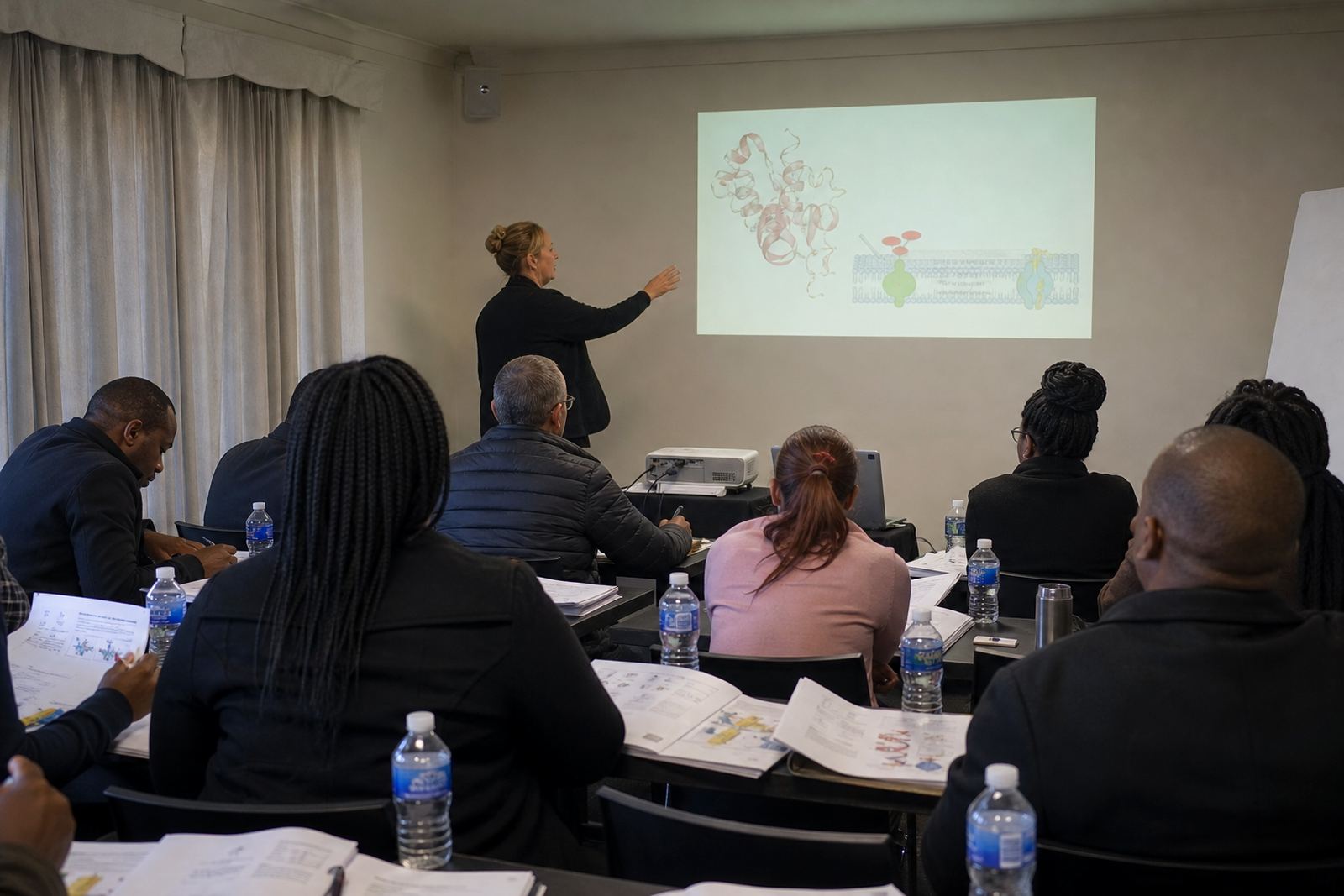
Why the brief came in from Bloemfontein
The client was a group of general practitioners in Bloemfontein looking for a short, practical note set they could use between consultations and teaching rounds. They wanted something that explained cytochrome P450 enzymes in plain language, with enough detail to support everyday medication conversations without turning the material into a pharmacology textbook.
The brief was simple, but specific. It had to suit doctors who already knew the basics of prescribing, yet still needed a calm refresher on how CYP450 pathways affect medicine handling, interaction risk and why patients can respond differently to the same treatment. The ask also covered a South African context, so examples needed to feel relevant to local practice rather than imported wholesale from another setting.
What we were asked to keep out
The most important constraint was to stay firmly in educational territory. The notes were not for testing, treatment, diagnosis or personal medical advice. They had to avoid any claim that a specific medicine would work a certain way for a certain person, and they could not include dosing guidance. Readers were to be directed back to their own doctor or pharmacist for individual medicine decisions.
We also kept the wording careful around metabolism, inhibition and induction so the notes would remain accurate without overpromising certainty. Where a point could vary by age, liver function, smoking status, diet or other medicines, the note flagged that variation rather than trying to simplify it away. That kept the content grounded and useful. A few sections were revised twice to make sure the tone stayed clinical, not salesy.
- No personal medical advice
- No dosing instructions
- No diagnosis or treatment guidance
- No unsupported studies, figures or clinical claims
- No brand names or product promotions
What the note set included
We supplied a compact set of educational notes designed for quick reading and repeated use. The content was structured around the core CYP450 ideas that usually matter in primary care, namely what the enzymes do, how drug interactions can happen, and why a medicine may behave differently from one patient to the next. Each section was written in plain English, with terms introduced before they were used again.
The note set included a short overview, interaction pointers, and a simple reference frame that clinicians could use when speaking to patients or checking a medicine history. We also added a short list of practical reminders about common situations that may call for extra caution, such as multiple medicines, recent changes in therapy, and questions about over the counter products or herbal remedies.
- Core CYP450 overview in plain language
- Drug enzyme interaction notes
- Quick reading summary for consult room use
- Plain explanations for common terminology
- Short reminder list for medicine review conversations
How we built it over three weeks
The project ran over three weeks from first brief to final delivery. In week one we mapped the key learning points and agreed the level of detail needed for busy GPs. Week two was used for drafting, tightening the structure, and checking that the wording stayed aligned with widely accepted general science only. Week three was for edit rounds, consistency checks and final formatting.
Because the audience included doctors in Bloemfontein and across South Africa, we kept the language professional but practical. We used examples that fit ordinary clinical work, such as medicine lists with more than one active ingredient, repeat scripts, and questions from patients who read the patient leaflet and want a clearer explanation. The pace was efficient, but not rushed. A small typo in an early draft was caught and fixed before delivery.
Result for the practice team
The finished notes gave the doctors a short reference they could use to refresh themselves before consultations, teaching sessions or practice meetings. The material helped them explain CYP450 topics without needing to reach for a longer textbook each time. It also gave the team a shared language for discussing interactions, which is useful when several clinicians are covering the same patient file.
What the client valued most was the balance between accuracy and brevity. The notes did not try to do too much, and that was the point. They were clear enough for quick use, but careful enough to support professional discussion. The final set also fit easily into internal teaching material and could be revisited when medicines changed or when staff wanted a refresher before a training talk.
- Short enough for day to day use
- Clear enough for teaching support
- Careful on wording and scope
- Useful for medicine review discussions
- Suitable for clinicians, not patients alone
What we would do again
We would keep the same approach for similar briefs in Cape Town, Johannesburg, Pretoria, Durban or Bloemfontein. Start with the clinical questions first, then build the science around those questions in a way that matches the reader’s level. For CYP450 work, that usually means keeping the foundation simple, then adding enough detail to be helpful without drifting into overstatement.
If the brief were repeated, we would again separate the topics into a clean sequence: enzyme basics, interaction pathways, common interpretation points, and a reminder that individual medicine decisions belong with the treating doctor or pharmacist. That structure works well because it respects the limits of general education and still gives clinicians something they can use straight away. It is also easy to update when a practice wants a fresh edition later on.
Key facts
| Project | Bloemfontein GP Notes |
|---|---|
| Client type | General practitioners and practice clinicians |
| Town | Bloemfontein |
| Format | Compact educational note set |
| Timeline | 3 weeks |
| Organisation details | Founded 2012, base in Rondebosch, Cape Town, led by Dr Luyanda Mbeki |