When a department needs CYP450 support
Many teaching teams know the science already, but they still need material that is tight, readable and consistent across lectures, tutorials and assessments. CYP450 enzymes come into focus when a module covers drug metabolism, genetic variation, herb and medicine interactions, liver function or nutrient pathways, and the teaching brief needs careful wording that students can trust.
Our work suits pharmacology, pharmacy, biomedical science, nutrition, physiology and clinical skills teams that want to align content across first year through to final year. In South Africa, lecturers also have to keep examples relevant to common prescribing patterns, public health education and multilingual classrooms. That means the content must be clear, not overloaded with jargon, and grounded in accepted general knowledge. We do not provide testing or treatment advice, only educational support that helps teams speak accurately about enzyme pathways and their limits.
- Module support for pharmacology, metabolism and therapeutics
- Reading packs for tutors, demonstrators and lecturers
- Plain-language summaries for mixed-ability student groups
- Reference checking for teaching notes and slides
What the typical teaching setup needs
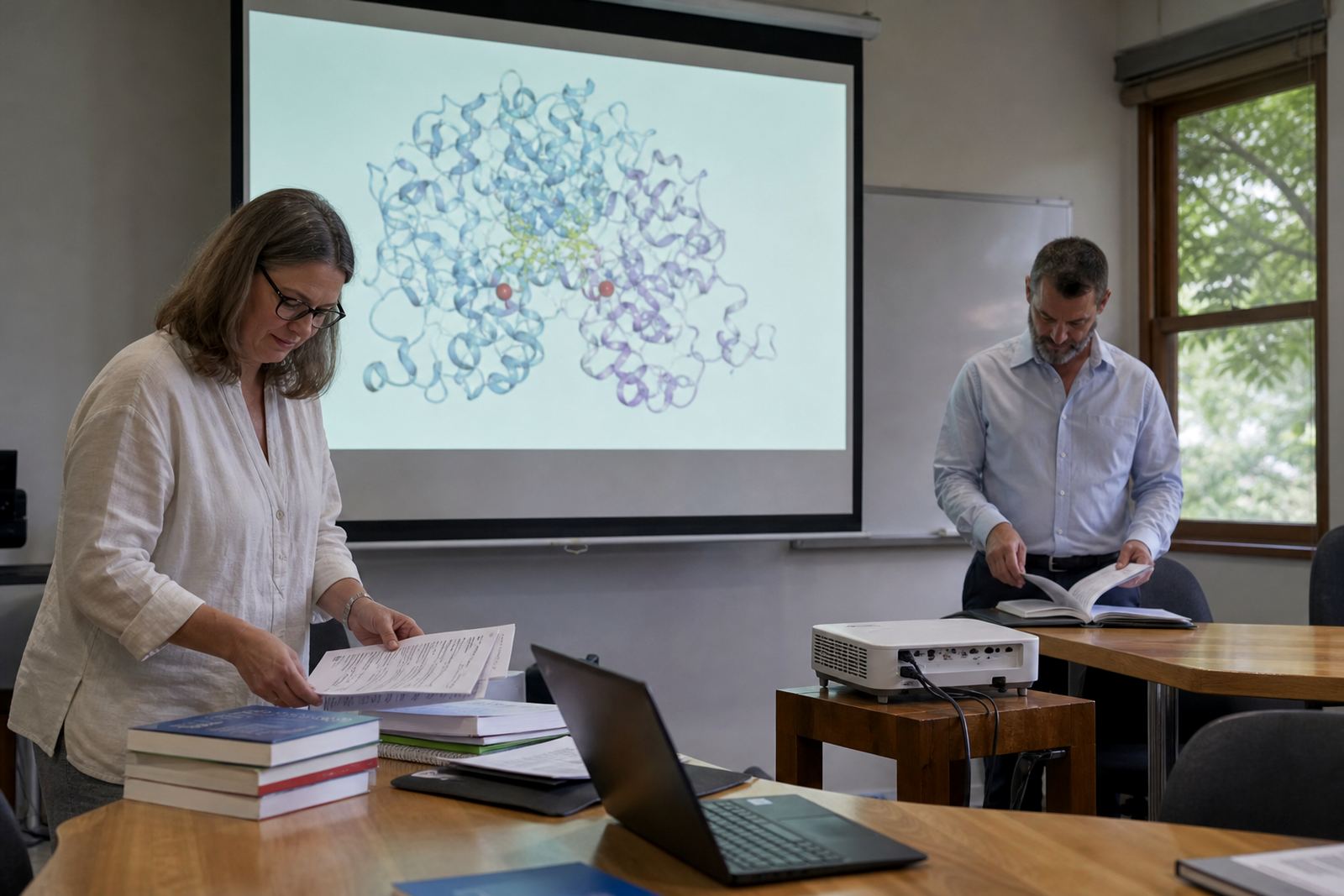
Most departments do not need specialist laboratory hardware for CYP450 teaching support. What they need is a working content system: lecture slides, a reliable projector or screen, a laptop for presentations, access to journal databases, a shared document folder and a simple way to track references. If the department runs blended teaching, the same material should also work on the learning platform and print well for class handouts.
For practical classes or case discussions, a whiteboard, printed pathway sheets and a small number of annotated case notes are usually enough. Some teams also ask for a classroom set of tablets or a computer lab booking so students can compare enzyme pathways, medicine classes and interaction summaries side by side. In older buildings around Cape Town or Bloemfontein, storage and room lighting matter more than people expect, especially where load-shedding interrupts live teaching and you need offline copies ready to go.
- Laptop, projector and backup charger for live teaching
- Access to journal databases and institutional library resources
- Learning platform for notes, quizzes and reading lists
- Printed pathway maps and summary sheets for tutorials
Planning the module around real teaching time
A good CYP450 teaching pack starts with the module plan, not the slide deck. First decide where the enzyme content fits, whether that is in basic pharmacology, clinical pharmacy, nutrition, drug safety or an integrated systems block. Then choose the level of detail the students actually need. A first year class may only need the broad idea that enzymes can speed up or slow down medicine breakdown, while senior students may need more detail on inhibition, induction and genetic variation.
Departments in Johannesburg, Pretoria, Durban and Cape Town often ask for material that can be used by several lecturers without each person rewriting the same section. That is where literature reviews and teaching notes help. We can prepare a shared core brief, then shape smaller versions for lectures, tutorials, case discussions or staff workshops. This keeps the wording consistent and reduces confusion when different lecturers cover related topics in the same term.
Budget planning depends on scope, level and turnaround. A short educational brief for one module may start around R3 500 to R8 000. A fuller literature review with source mapping, teaching notes and reference lists often sits between R12 000 and R35 000. Larger curriculum support, multiple briefs or staff training talks can range from R25 000 to R60 000 or more, depending on how many deliverables are needed and how much review time the faculty wants.
Common mistakes academic teams run into
One common mistake is treating CYP450 as a single topic rather than a network of pathways that affect different medicines in different ways. Another is using oversimplified wording that sounds neat in class but creates confusion later in tutorials or assessments. Teams also sometimes rely on outdated notes, copied diagrams or broad statements that do not make clear when something is general knowledge and when it depends on the specific medicine, person or context.
We often see modules that mention interactions without explaining the difference between an enzyme inhibitor, an inducer and a drug that is simply processed by that enzyme. Some notes also blur clinical education with personal health advice, which is not helpful in an academic setting. Our role is to help departments keep the tone careful and factual, while reminding readers that students and staff should speak to their own doctor or pharmacist about any medicines they use.
- Using one pathway example for every medicine interaction
- Leaving out genetics, liver function or age related variation
- Mixing general teaching content with personal medical advice
- Using diagrams without proper source checking
How we support departments across South Africa
CYP450 Insights works from Rondebosch, Cape Town and supports academic teams across the country. Some clients want a literature scan for a new semester module, while others need a plain-language summary for a lecturer who is not a specialist in enzyme science. We also prepare case note development, slide deck writing, curriculum support and content editing so that the same scientific message carries through from the reading list to the classroom.
For departments with busy teaching calendars, we can work in stages. A first pass may cover key enzyme families, interaction principles and the limits of current knowledge. A second pass can focus on your module outcomes, assessment language and learner support material. If your faculty includes pharmacy, medicine and wellness education in one programme, we can also help separate the content so each group gets the level of detail it needs, without extra clutter.
- Literature reviews for module planning and staff preparation
- Educational briefs for lectures and tutorials
- Training talks for academic teams and tutors
- Journal scans, interaction overviews and reference list building
What departments usually ask for first
Most new enquiries start with a single module, a few core outcomes and a deadline. From there, the usual request is for a concise review of accepted CYP450 concepts, a teaching brief that fits the class level and a reference list that lecturers can use with confidence. Some teams also want a workshop outline for staff induction or a short script that helps non-specialist tutors explain the topic without drifting into unnecessary detail.
If you are planning a new pharmacology block or refreshing an existing metabolism unit, it helps to gather your outcomes, reading list and lecture format before sending through the brief. That gives us a clear view of the likely scope, the depth of coverage and the number of deliverables required. We then shape the support around your timetable, your students and your teaching style, whether the module is run from Claremont meetings, Newlands meetings or a wider online faculty setup.
- Module outline and learning outcomes
- Current slides, notes or reading packs
- Deadline for lectures, tutorials or assessments
- Preferred level: introductory, intermediate or advanced