Why hospital pharmacies ask for CYP450 support
In a hospital setting, CYP450 questions usually come up when a medicine change affects more than one pathway at the same time. A pharmacist may be checking for enzyme inhibition or induction, looking at a new admission with a long medicine list, or helping a ward team understand why one patient responds differently from another. The work is often time-sensitive and needs plain language that still respects the science.
Our support is built for these practical questions. We prepare educational material for hospital pharmacists, clinical teams and in-house training sessions, always keeping to established general knowledge and avoiding personal medical advice, dosing advice or diagnosis. For individual decisions, patients should speak to their own doctor or pharmacist about their medicines.
What a hospital pharmacy brief usually includes
A useful brief should help the reader move from a complex literature pile to a clear working summary. For hospital pharmacy teams, that usually means separating the enzyme pathway facts from the clinical context, then noting where caution is often needed with common medicine classes. We also flag the difference between a known interaction, a possible interaction, and a situation where evidence is limited or mixed.
- Plain-language summary of the CYP450 pathway involved
- Interaction overview for common hospital medicine groups
- Notes on what the literature generally agrees on
- Reference list for the pharmacy team to review
- Optional slide deck text for ward education or CPD talks
That structure helps busy teams in Cape Town, Johannesburg, Pretoria, Durban and Bloemfontein keep the science readable without stripping out the detail they need.
Typical equipment and room set-up for training talks
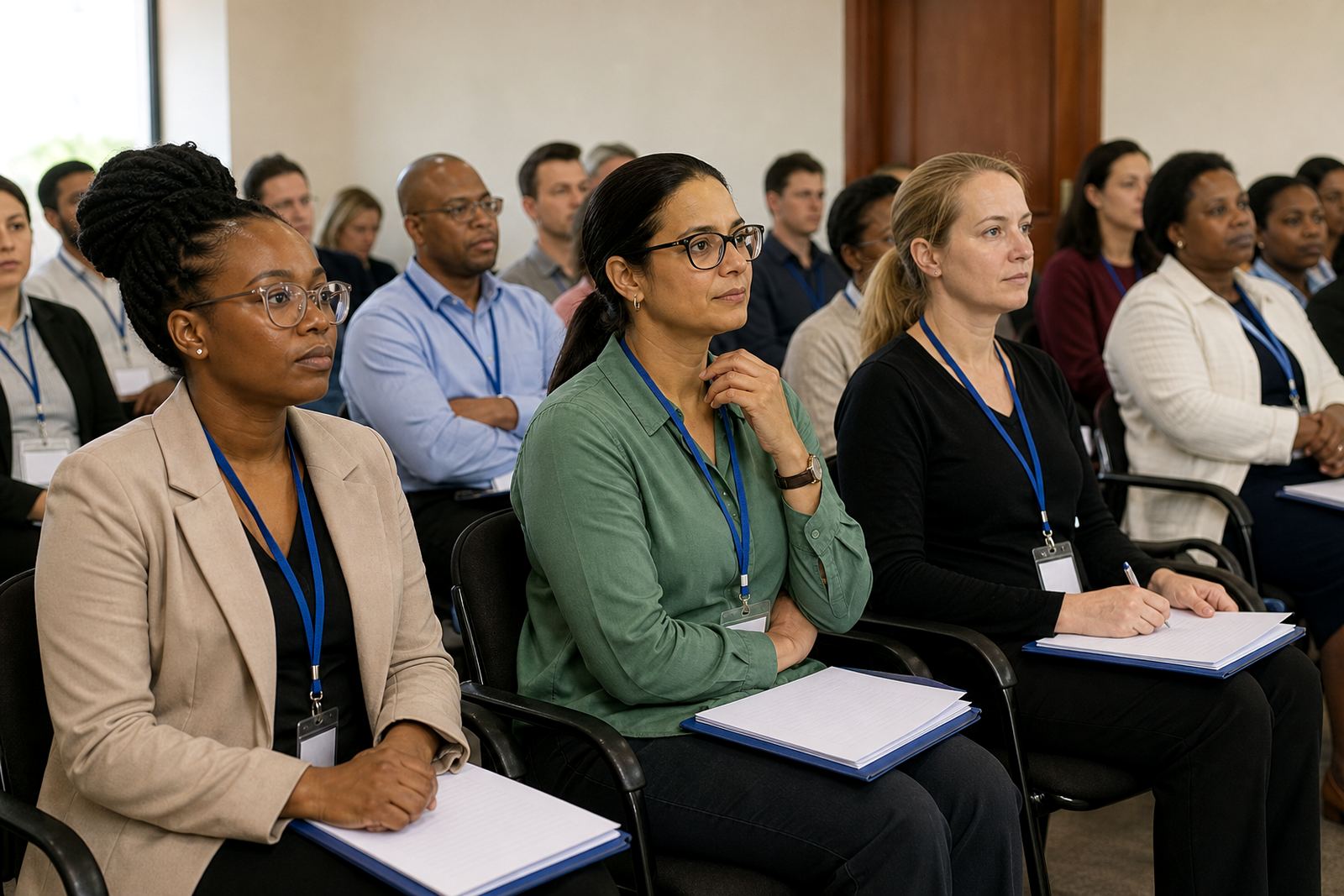
When a hospital pharmacy team hosts a talk or internal teaching session, the set-up does not need to be complicated. A quiet meeting room, a screen or projector, a reliable laptop, seated space for note-taking and a simple audio setup are usually enough. If the building is affected by load-shedding, it helps to have backup power for the projector and Wi-Fi, or printed handouts ready if the network drops out.
For larger hospitals or teaching sites, the best room is one with clear sightlines, enough space for clinicians to come and go between rounds, and seating arranged so the presenter can speak directly to the group. Good ventilation matters in Cape Town winters and coastal humidity can affect paper, cables and storage, so a dry cupboard for printed packs is worth planning.
- Projector or large display
- Laptop with saved local files
- Stable internet for literature checks, when available
- Printed briefing notes for outage back-up
- Whiteboard or flip chart for pathway mapping
Layout and planning advice for busy hospital teams
If the goal is to support pharmacists reviewing interactions across larger treatment plans, keep the layout simple and the workflow tight. Put the most used reference material in one place, group related medicine classes together and make sure the team can find the latest version of any brief quickly. A short sign-in sheet or attendance note can help with internal education records, especially where CPD or departmental sign-off is needed.
For ward-based or outpatient pharmacy teams, plan the session around handover times and avoid long blocks that pull staff away from urgent dispensing work. In larger hospitals, it helps to run one session for clinical pharmacists and another for dispensing staff if the questions differ. That way the discussion stays relevant and nobody is forced to sit through material that does not match their job.
Common mistakes we help hospital pharmacies avoid
A frequent problem is treating every interaction as if it has the same weight. In practice, some CYP450 effects are well established, while others depend on the patient, the full regimen and the wider clinical picture. Another mistake is relying on a short summary without checking the original literature or the strength of the evidence. That can lead to over-cautious or inconsistent advice between wards.
Teams also sometimes mix patient education with internal clinical review. Those are not the same task. Internal material can be more technical, while patient-facing wording needs to be simple and careful. We often help teams separate the two so the same topic can be used in different settings without confusion.
- Using one generic note for every interaction
- Skipping reference checks when the evidence is narrow
- Writing material that is too technical for ward use
- Leaving out the practical hospital context
- Not updating old notes after a formulary or protocol change
Budget ranges for hospital pharmacy education support
Budgets depend on how much reading, editing and presentation support the hospital team needs. A focused literature review or interaction overview for a single topic usually sits in a lower range than a full training package with slides, handouts and follow-up notes. For South African hospital settings, smaller one-off briefs often start around R3,500 to R8,000, while more detailed review work can sit between R8,000 and R18,000. Training talks, slide deck writing and curriculum support may be priced higher when several hours of preparation and revision are needed.
If the brief is for a multi-ward or multi-site group, it is usually more cost effective to combine topics rather than commission each one separately. For example, a hospital in Cape Town may ask for one interaction overview, one plain-language summary and one training session pack at the same time, which reduces duplication and keeps the language consistent across the department.
How CYP450 Insights supports hospital pharmacy teams
CYP450 Insights is based in Rondebosch, Cape Town and supports clinicians, pharmacists and wellness practitioners across South Africa. Our team prepares literature reviews, educational briefs, plain-language summaries, journal scans, interaction overviews, case note development, slide deck writing and curriculum support. Dr Luyanda Mbeki leads the organisation, with Ayesha Daniels, Pieter van Rooyen, Naledi Molefe, Sibusiso Khumalo and Taryn Naidoo contributing across research, writing, education and editorial work.
Hospital pharmacy teams often need material that is careful, local in tone and ready for internal use. We work with departments in Cape Town, Johannesburg, Pretoria, Durban and Bloemfontein, and clients reach us through the enquiry form on our contact page. If you need a clear summary for a treatment review, a ward talk or a departmental teaching session, we can help shape the content into something your team can use with confidence.