When a CPD group needs CYP450 content
CPD sessions often start with a simple need: the audience wants to understand why one medicine works well for one person and not for another, and how enzyme pathways fit into that picture. CYP450 groups suit clinicians, pharmacists and wellness practitioners who want a clear explanation of metabolism, drug interactions and the limits of what can be said from general science alone.
These sessions are especially useful when teams are seeing questions about polypharmacy, herbal products, smoking, liver function or medicines that are known to be handled by common CYP450 pathways. The goal is not to turn a room into a genetics lab. It is to give people a steady framework they can use in conversation with patients and colleagues, then refer back to the doctor or pharmacist for individual decisions.
- Suitable for hospital in-services, pharmacy CPD evenings and practitioner study groups
- Works for mixed audiences with different levels of science background
- Can be built around a single enzyme family or a broader interaction overview
Typical talk-ready material for the session
For a CPD group, the material usually includes a slide sequence, a short handout and speaker notes that keep the science readable. We focus on cytochrome basics, what the enzymes do, common interaction patterns, and how to explain uncertainty without over-promising. The content can also include a reference list for further reading, plus a simple glossary for terms that often trip people up.
A good package is practical. It should help the presenter move from basic pathway science to real-world communication, including what to say when a participant asks for personalised advice. It should also leave room for Q&A, since clinicians and pharmacists often want to test how the concepts apply in everyday medicine reviews and patient counselling.
- Slide deck writing for 20 to 60 minute talks
- Plain-language speaker notes for internal facilitators
- Reference list building and journal scan summaries
- Case note development for discussion based learning
Layout and planning for CPD groups in South Africa
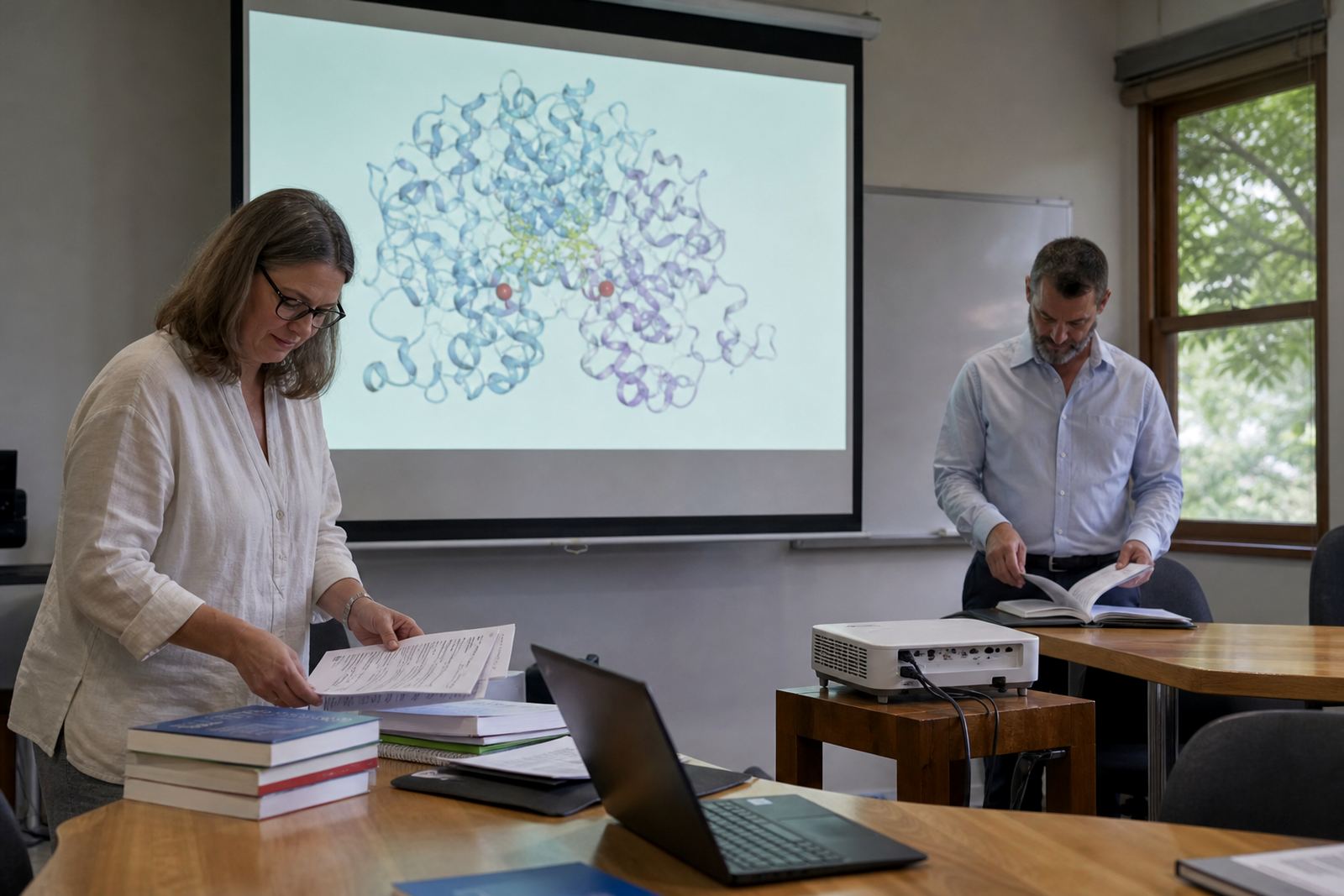
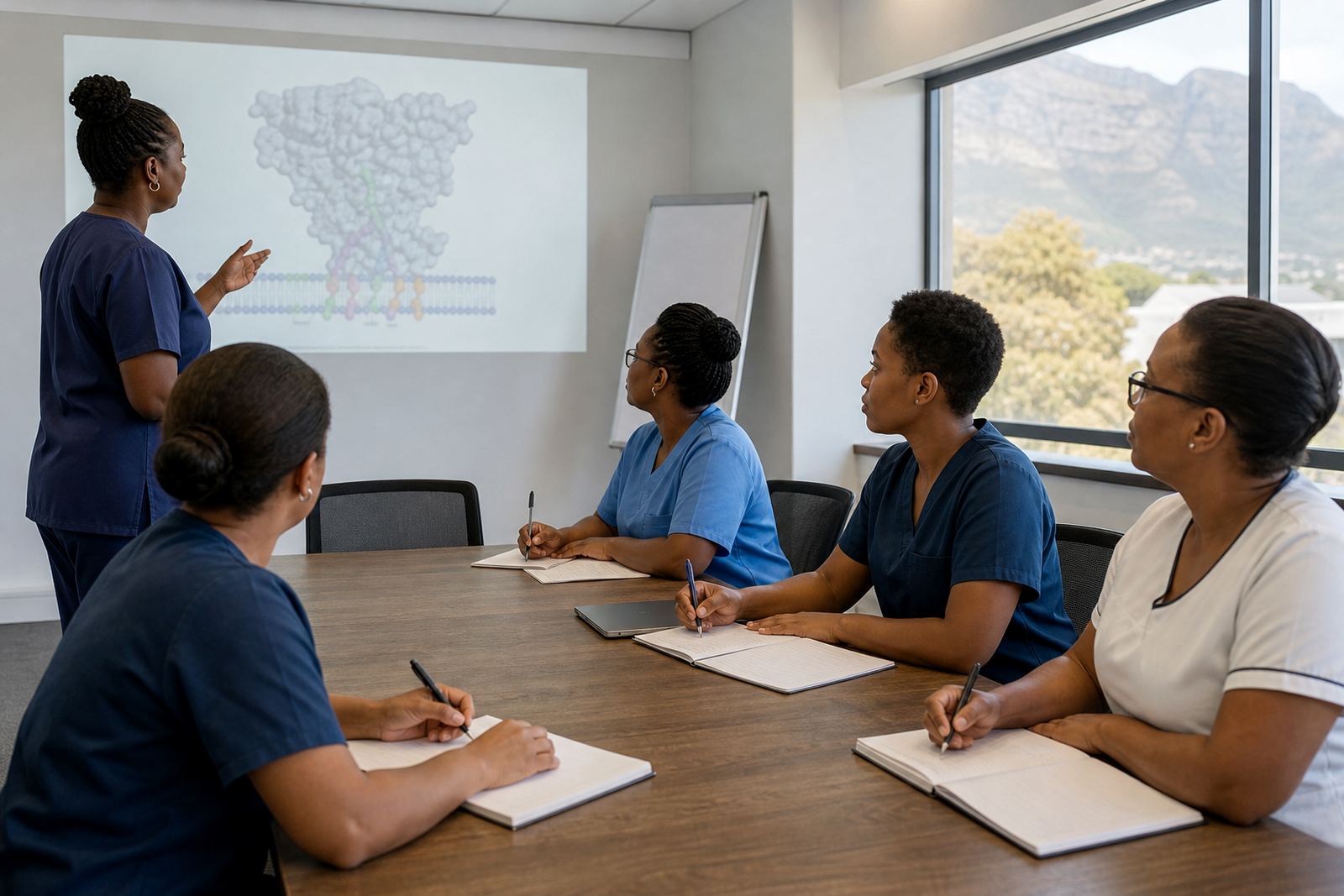
In Cape Town, Johannesburg, Pretoria, Durban and Bloemfontein, CPD groups tend to work best when the room setup is simple and the session timing is realistic. A small boardroom or meeting room with a screen, projector or large display and enough seating for discussion is usually enough. For larger groups, a microphone helps, especially when the room is long or the air-con is noisy.
Because load-shedding can interrupt a live session, it is worth planning a backup that does not depend entirely on power. Printed notes, a battery-backed laptop and a saved PDF copy of the slides can prevent delays. If the session is hybrid, the audio test matters as much as the slides. Poor sound is the quickest way to lose a group.
- Test projector, sound and clicker before the first attendee arrives
- Keep a printed spare of the slides or key notes
- Allow time for discussion and questions, not just lecture time
- Use clear visuals with simple pathway diagrams and no crowded tables
Common mistakes in CYP450 CPD talks
One common mistake is talking about CYP450 as if it explains everything. It does not. The enzymes are important, but so are age, organ function, other medicines, adherence, food, smoking and the limits of any available evidence. Another mistake is using too much jargon, which makes the talk feel technical but not actually useful.
It also helps to avoid overstating what genetics or enzyme pathways can tell you about an individual. A CPD audience usually needs balanced language: what is well established, what is uncertain and what should be checked with the treating doctor or pharmacist. That keeps the session credible and safe for professional use. A rushed ending is another frequent miss, because people need time to translate the science into their own setting.
- Avoid one size fits all conclusions
- Do not mix general science with personal medical advice
- Keep examples familiar to South African practice settings
- Leave space for questions about medicines, herbs and interaction checks
Budget ranges for CPD group support
Budgets depend on the length of the session, the amount of reading needed, and whether the group needs only a briefing note or a full set of slides, references and facilitator notes. A short educational brief for an internal meeting will sit at the lower end. A fuller CPD package with slide writing, literature review support and multiple revision rounds will cost more.
As a practical guide, smaller CPD support projects may start from about R3 500 to R7 500. Mid-range session packs often fall between R8 000 and R18 000. Larger or more detailed programmes, especially those involving several topics, workshops or repeated updates, can run from R20 000 upwards. Final figures depend on scope, turnaround time and how much source checking is needed.
For organisations planning multiple branches or recurring meetings, it can be more efficient to build one core CYP450 session and then adapt it for different audiences in Rondebosch, Claremont, Newlands or further afield. That keeps the science consistent while still allowing the wording to suit each room.
How we support CPD facilitators and organisers
Our work is built for people who need careful material they can trust in front of a professional audience. We prepare literature reviews, educational briefs, plain-language summaries and training talks that make CYP450 science easier to teach. The focus stays on general understanding, interaction awareness and clear communication, not diagnosis or treatment.
If your CPD group needs support, the process is straightforward: outline the topic, audience and session length, then we prepare the content around that brief. If the audience includes different professional groups, we can adjust the language so it works for everyone in the room without losing scientific accuracy.
- For clinicians, pharmacists and wellness practitioners across South Africa
- Suitable for one-off CPD talks or ongoing education series
- Enquiries are handled through the contact page enquiry form
Using the session after the talk
A good CPD group does not end when the chairs are stacked. The most useful material is something the team can use again in handover meetings, journal clubs and internal training. That is why follow-on support can include reference lists, short summary sheets and updated notes for future sessions. It is also useful to have a version that can be shared with staff who missed the live talk.
When the content is written clearly, people are more likely to remember the basics and less likely to repeat half-remembered claims. That matters in a field where small misunderstandings can lead to confusion about medicines. The aim is steady, responsible communication that supports professional discussion and tells people to speak to their own doctor or pharmacist about their medicines.