

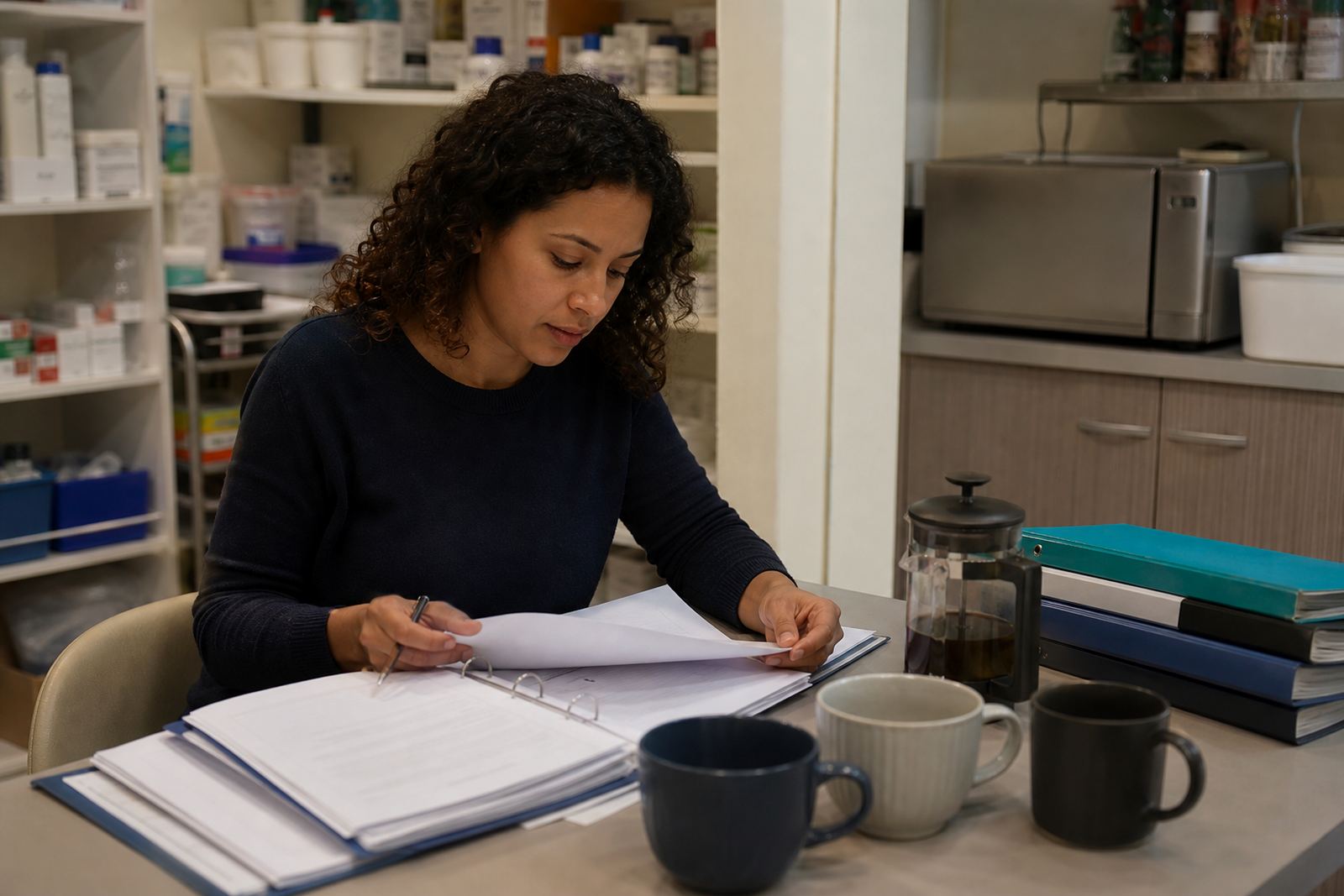
Why the Claremont team asked for a CYP450 brief
The client was a community pharmacy team in Claremont, Cape Town, working with a steady mix of repeat scripts, OTC requests and questions about medicine changes. Their pharmacists wanted a short, practical pack on cytochrome P450 topics that staff could use when speaking to patients about possible interactions, food and supplement questions, and the kind of phrases that keep explanations clear without sounding rushed.
The brief was not for testing or treatment. It was designed as an educational support tool for pharmacy conversations, with a strong focus on plain wording and careful boundaries. The team needed something that could be used across busy shifts, including times when load-shedding affected workflow and staff had less time for long explanations.
- Client type: community pharmacy team
- Town focus: Claremont, Cape Town
- Audience: pharmacists, dispensary staff and front-of-counter teams
- Topic: common CYP450 discussion points and counselling language
Scope and limits of the brief
We kept the scope tight so the document stayed useful. The pack covered general CYP450 enzyme families, why some medicines may be affected by enzyme inhibition or induction, and how to explain interaction concerns in everyday terms. It also flagged the difference between a general education note and patient-specific clinical judgement, which must remain with the prescriber or pharmacist responsible for the medicine plan.
There were clear constraints from the outset. No dosing advice, no personal medical advice, no diagnosis and no claims about how any specific patient would respond. We also avoided speculative language and anything that could be read as a treatment recommendation. The aim was to help the pharmacy team say the right thing in a calm, accurate way, not to overstate what CYP450 information can do.
- General CYP450 pathways only
- Interaction language for counselling, not clinical decision-making
- Plain-English notes for staff use
- No patient-specific claims or dosing guidance
What we supplied for the pharmacy pack
The delivery included a structured literature review summary, a plain-language discussion sheet and a set of counselling prompts that staff could adapt at the counter. We also prepared a short interaction overview that grouped common themes by medicine class rather than by brand, so the material stayed useful across different scripts and formularies. That kept the focus on the mechanism and the counselling point, which is what busy pharmacy staff usually need.
To keep the pack practical, we added notes on when to refer a question back to the patient’s doctor or pharmacist, especially where a medicine change, multiple medicines or a supplement question was involved. We also tightened the wording so the same message could be used by senior staff and newer team members without sounding overcomplicated.
- Literature review summary
- Educational brief for internal use
- Plain-language counselling lines
- Interaction overview by medicine theme
- Reference list building for the pack
Key facts that shaped the final wording
CYP450 enzymes are central to how the body processes many medicines and other compounds, so pharmacy teams often need to explain the topic in a way that is accurate but not overwhelming. The brief therefore used short definitions, simple examples of what an interaction is, and a reminder that not every interaction is clinically important. That distinction helps prevent unnecessary alarm while still supporting safe referral where needed.
We also wrote for a South African setting. In practice that meant recognising that pharmacy teams serve patients who may ask about prescribed medicines, over-the-counter products, traditional preparations and supplements in the same conversation. The wording had to be broad enough for that mix, while still careful about unknown product quality, mixed ingredient lists and the need to check with a pharmacist or doctor before changes are made.
- Focus on common counselling questions, not rare edge cases
- Mechanism-based explanations rather than brand-led notes
- Local pharmacy context, including mixed medicine use
- Clear referral wording for complex cases
Timeline and working method
The project ran over three weeks from first request to final pack. Week one covered scope setting and source review, week two focused on drafting and tightening the counselling language, and week three covered edits, reference checks and final formatting. That pace suited the client’s need for a short lead time without losing care over the wording.
We worked in a way that kept the information readable for a pharmacy floor. First came the literature scan, then a draft summary, then a pass for practical use. The final edit removed anything too dense and brought the key points closer to the way staff actually speak to patients. It sounds small, but that sort of wording work matters when a queue is building and the team has limited time.
- Week 1: scope, source scan and outline
- Week 2: draft brief and counselling language
- Week 3: review, reference check and final pack
Outcome for the pharmacy team
The result was a compact reference pack that the Claremont team could use during day-to-day medicine conversations. It gave staff a steadier way to explain CYP450 issues, especially when patients asked why a medicine might behave differently or why a pharmacist was checking for interactions. The brief also helped create more consistency across the team, which is useful when several people answer similar questions in one day.
What the client valued most was the balance between accuracy and plain language. The material did not try to do too much, and it did not promise more than the science can support. It gave the team language they could trust, plus a clear line to refer patients back to their own doctor or pharmacist when the question moved beyond general education. The tone stayed practical, which is what pharmacy staff tend to use best.
- Clearer patient-facing language
- More consistent counselling across staff
- Useful reference for interaction questions
- Better handover notes for complex conversations
What we would do again for a similar brief
If we repeated the work for another pharmacy in Cape Town, Johannesburg, Pretoria, Durban or Bloemfontein, we would keep the same structure and the same limits. A short literature summary, a plain-language handout and a concise interaction overview are usually enough for a busy team. We would also keep the referral wording visible, because pharmacy counselling works best when everyone knows where the boundary sits.
We would again build the brief around common questions first, then add the supporting science beneath it. That approach keeps the material usable for staff training, counter work and follow-up conversations. For a pharmacy team dealing with changing rosters, stock pressure and the usual interruptions of a South African workday, that practical order is often the most helpful part.
- Keep the pack short enough for real use
- Lead with common questions and simple wording
- Use references that support the summary without crowding it
- Include a firm note to speak to a doctor or pharmacist about specific medicines
Key facts
| Project type | Pharmacy-focused CYP450 summary pack |
|---|---|
| Client location | Claremont, Cape Town |
| Audience | Pharmacists and pharmacy support staff |
| Timeline | 3 weeks |
| Core deliverables | Literature review summary, educational brief, counselling language, interaction overview |
| Project lead | Dr Luyanda Mbeki with the CYP450 Insights science team |