When medical writers need CYP450 support
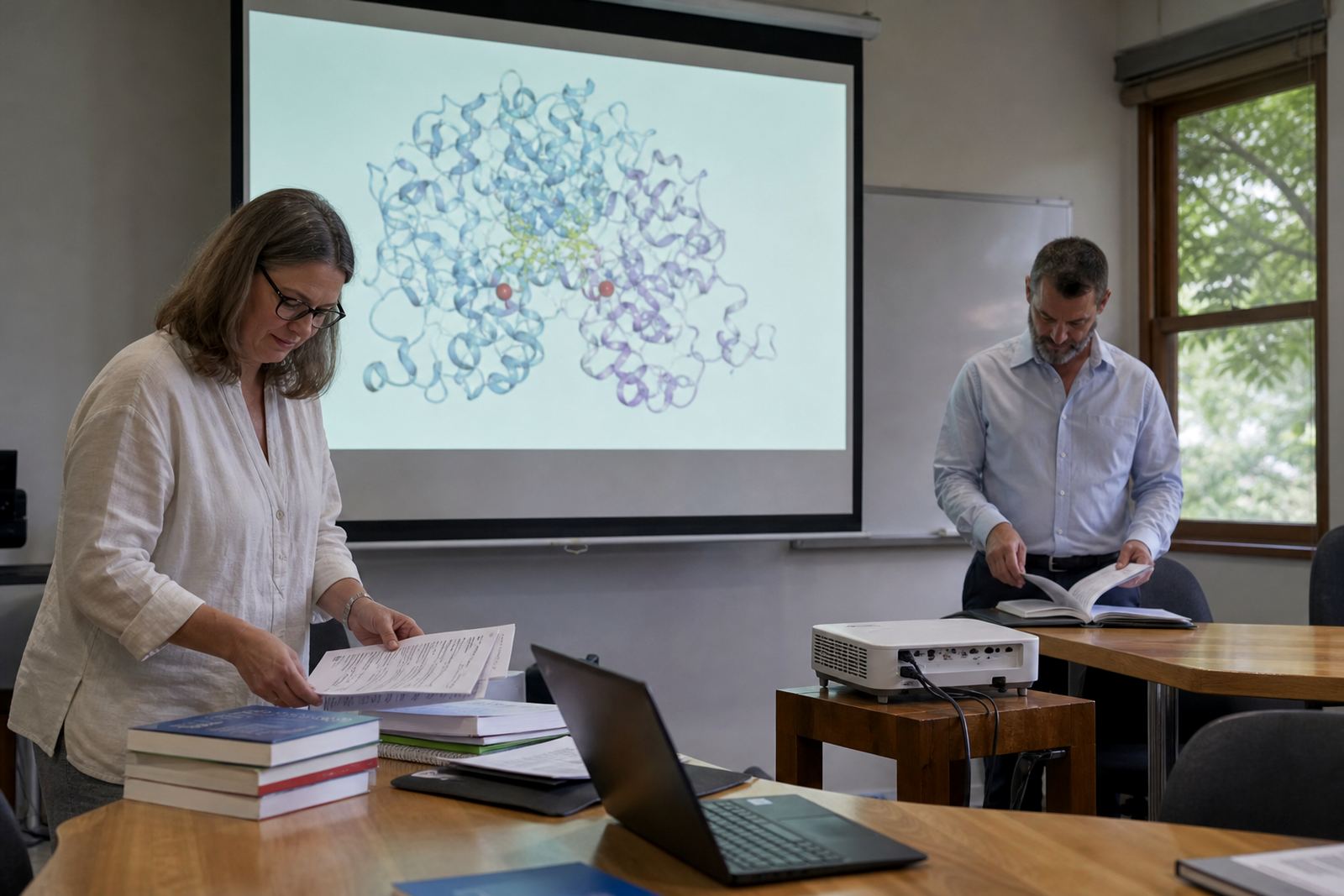
Medical writers often need one clean source pack before they can draft a patient handout, clinician note, training outline or background brief. That is where CYP450 Insights fits in. We gather established material on enzyme pathways, common interaction principles and plain-language wording that helps keep a document accurate without turning it into a lecture.
This service suits teams in Cape Town, Johannesburg, Pretoria, Durban and Bloemfontein who are preparing education material for a clinic, practice group, university programme or wellness audience. The aim is not treatment advice and not diagnosis. It is to give writers a clear base that they can use while reminding readers to speak to their own doctor or pharmacist about medicines.
- Source summaries for CYP2D6, CYP3A4, CYP2C19 and related enzyme families
- Plain-language explanations of drug-enzyme interaction terms
- Notes on where a topic is well supported and where caution is needed
- Reference lists that are organised for drafting and internal review
Typical setup for a writing team
For most projects, the equipment set is simple. A laptop, stable internet connection, reference management software, shared cloud folders and a secure place to store working drafts are usually enough. In South Africa, load-shedding and patchy connectivity still affect delivery schedules, so many writers keep local copies of key PDFs and a back-up power plan for editing sessions. In coastal areas like Cape Town, humidity can also be a nuisance for paper files and notes if they are left in storage too long.
The practical layout is less about fancy gear and more about how the work moves. A writer needs a source folder, a terms sheet, a reference list, a review tracker and a clean approval path. If several people are involved, one person should hold the master version so edits do not drift.
- Working laptop or benchtop with a reliable word processor
- Reference manager for citations and source tracking
- Shared storage with version control
- Printer or scanner only if your internal review process still needs paper
- Back-up power and data for deadline days
How we structure source-organised briefs
Our briefs are written so a medical writer can move from source to draft without re-reading the same paper five times. We group material by topic, for example enzyme function, interaction basics, common medicine classes affected by metabolism, and wording that stays careful for non-specialist readers. Where the science is straightforward, we keep the language direct. Where it is not settled, we say so plainly.
That structure helps when a brief will be used by a clinician, pharmacist or wellness practitioner in different settings. It also helps when a team in Rondebosch, Claremont or Newlands needs the same source pack for a workshop, slide deck or curriculum note. The tone is steady, not promotional, and it avoids claims that go beyond accepted general knowledge.
- Topic map before drafting begins
- Short source notes with the most relevant points first
- Plain-language definitions for technical terms
- Reference list building for internal or external use
- Optional case note development for education purposes only
Planning a writing brief that stays manageable
The best results usually come from a tight scope. A writer should decide early whether the output is a 1 page summary, a longer background brief, a slide pack or a training handout. The more focused the question, the easier it is to keep the references relevant. A brief that tries to cover every enzyme, every medicine class and every audience at once can become muddy very quickly.
Before the work starts, it helps to agree on audience, reading level, citation style and review steps. If the document will be used across South Africa, it may also need wording that suits mixed clinical environments, from large urban practices to smaller regional settings. We can work with teams in Pretoria, Durban and Bloemfontein as well as Cape Town based groups and keep the language fit for practical use.
- State the audience first, then the level of detail
- Limit each brief to one main educational purpose
- Confirm whether the output needs slides, notes or a full handout
- Set a review date so the final draft does not stall
Common mistakes in CYP450 writing
One common mistake is using enzyme language as if it applies the same way to every person. Another is over-simplifying a pathway until the meaning changes. Writers also sometimes mix general science with individual medical guidance, which is not appropriate for a public or professional education piece. If a source says something may affect medicine response, that does not mean it should be presented as a guaranteed outcome.
Another problem is weak referencing. A brief with no clear source trail becomes hard to trust, especially when it is passed between an editor, a clinician and an educator. Good writing keeps the source trail visible and the wording careful. If the final piece touches on medicines, the reader should be directed to their own doctor or pharmacist for advice on their own regimen.
- Avoid claiming certainty where the literature is still mixed
- Do not turn enzyme notes into treatment instructions
- Keep citations close to the relevant paragraph
- Do not skip the review step just to meet a deadline
Budget ranges for writing support in Rand
For educational CYP450 work, budget depends on scope, source depth and turnaround time. A short source-organised summary may sit in a lower range, while a full literature review, training talk pack or reference-heavy brief will cost more because of the reading and checking involved. As a guide, many smaller education briefs fall around R2,500 to R6,000, while more detailed reviews and multi-part deliverables can range from R7,500 to R18,000 or more, depending on the brief.
If a team needs ongoing support, such as monthly journal scans, recurring interaction overviews or curriculum support, a retainer can be more practical than one-off quotes. The best approach is to define the deliverable clearly, then price the work against the number of sources, review rounds and final formats required. That keeps the project predictable for both sides.
- Short summary: often R2,500 to R6,000
- Detailed review or education pack: often R7,500 to R18,000+
- Ongoing support is usually better for repeated updates
- Urgent turnaround can increase the fee